The Outward Migration Trend in Ho Chi Minh City's Real Estate Market: A Driver for Sustainable Development and Opportunities for Homebuyers
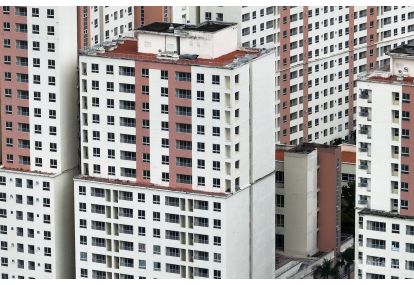
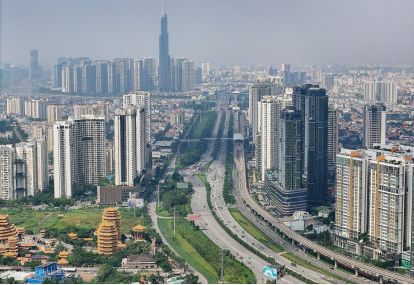
Ho Chi Minh City's real estate market is witnessing a significant new trend—a strong shift toward the outskirts. Against the backdrop of an increasingly scarce supply in the city center, homebuyers seem more willing to relocate to farther areas to own assets that meet their living and investment needs.
According to CBRE Vietnam's Q3 2024 report, the townhouse and villa market in Ho Chi Minh City recorded a surge in supply, with over 132 new townhouses publicly launched in Binh Chanh District, more than an hour's drive from the city center. The initial prices of these new townhouses were around 90 million VND per square meter, while secondary market transaction prices remained above 140 million VND per square meter. The price gap between the primary and secondary markets clearly reflects the imbalance between supply and demand, particularly in suburban areas.
Furthermore, the report also showed that the townhouse and villa market in Ho Chi Minh City recorded over 150 successful transactions in Q3 2024, mainly from newly launched projects and those with remaining primary supply. This figure marks significant growth, indicating that housing demand remains high even amid increasing cost pressures. In the final quarter of 2024, the market is expected to see the launch of over 300 low-rise residential units, bringing the total residential supply for 2024 to nearly 600 units—a figure far higher than the mere 40 units in 2023, demonstrating a strong recovery and growth in the townhouse and villa segment.
The CBRE report also highlighted that many real estate projects previously stalled due to legal issues have now been resolved, such as the Gem Riverside project in Thu Duc City and The Forest Gem project in Binh Thanh. Resolving these legal issues is a significant development that helps release resources and create conditions for projects to proceed, while also increasing market liquidity. Since 2019, the number of new real estate project approvals in Ho Chi Minh City has dropped significantly, so this breakthrough is transformative and helps restore market confidence in growth potential.
Ho Chi Minh City's apartment market is also witnessing a notable outward shift. The restart of apartment projects such as D-Homme (District 6) and D-Aqua (District 8) has played an important role in boosting market activity. These projects have adjusted prices upward by 10% to 30%, reflecting expectations for the long-term development potential of these areas. Secondary market apartment prices grew by an average of 3% to 5% quarter-over-quarter, with high-end apartment prices in particular seeing a year-over-year increase of 10%. This is a significant growth, showing that the high-end segment remains strongly attractive to investors seeking long-term value.
Ms. Duong Thuy Dung, Executive Director of CBRE Vietnam, said: “The interest of Ho Chi Minh City homebuyers in neighboring markets such as Binh Duong and Long An is becoming increasingly evident. In the first 9 months of 2024, Binh Duong recorded over 3,000 newly launched apartments, nearly twice as many as Ho Chi Minh City. This is partly due to the price difference, with selling prices in Binh Duong only 50% to 70% of those in Ho Chi Minh City. This is an important factor driving homebuyers to move further away in order to own a home, especially those with middle incomes who find it difficult to afford high prices in the city center.”
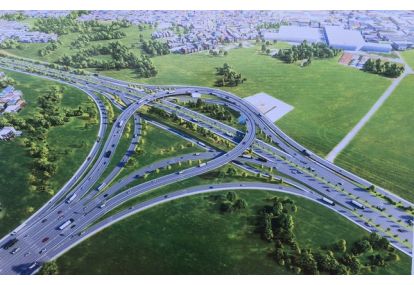
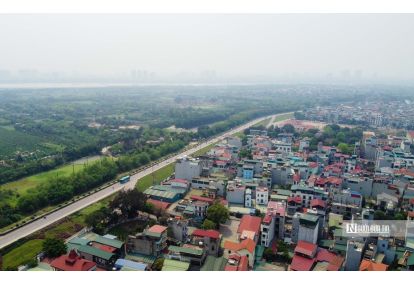
Ms. Duong also emphasized that the trend of moving to peripheral areas is not only a solution to the rising property prices in central Ho Chi Minh City but also creates more opportunities for people with moderate or lower incomes. Expanding peripheral areas helps reduce pressure on housing demand in the central districts while creating a balance in development between the inner city and outer areas. This expansion also helps improve transportation and urban infrastructure in neighboring areas, thereby promoting sustainable and balanced development.
The shift to peripheral areas not only helps alleviate supply pressure in the city center but also reduces the pressure of rising property prices, making it easier for families with genuine needs to access suitable housing. This is considered an important step towards sustainable and harmonious development of the Ho Chi Minh City real estate market, not only in terms of planning but also economically and socially. Concentrated development of peripheral areas will create a more diverse ecosystem to meet the different needs of residents, thereby promoting the overall and sustainable development of Ho Chi Minh City.
#FTT Real Estate Co., Ltd.
(#Real Estate Consulting / #Leasing and Property Management and Sales / #Furniture and Decoration)
LINE official account @ymq0321f|Zalo +886 956 918 888|WeChat
┃Youtube: FTT REAL ESTATE
┃Website : www.fttland.com