Launching the Ho Chi Minh City - Moc Bai Expressway Project: Connecting and Developing the Northwest Region
The Ho Chi Minh City Department of Transport (GTVT TP.HCM) has just issued a notice regarding the launch of investment in the Ho Chi Minh City - Moc Bai Expressway project, one of the key transport projects connecting important economic regions and driving the development of the Northwest region. This project not only plays a crucial role in improving regional transport connectivity but is also an important driver for economic development, attracting investment, and enhancing the quality of life for local residents. Deputy Director of the Ho Chi Minh City Department of Transport, Phan Cong Bang, chaired a meeting with relevant parties to review the investment scale and technical issues related to this expressway.
Reviewing and Evaluating the Investment Scale
During the meeting, Phan Cong Bang emphasized the importance of reassessing the investment scale of the Ho Chi Minh City - Moc Bai Expressway project, particularly in all aspects of the completion phase. To ensure the project's effectiveness, sustainability, and adaptability to future traffic demands, the Ho Chi Minh City Department of Transport requested the Ho Chi Minh City Traffic Construction Investment Project Management Board (Traffic Board) to collaborate with consulting units, the Department of Planning and Architecture, the People's Committee of Cu Chi District, and relevant agencies. This evaluation process aims not only to meet current needs but also to anticipate future growth, ensuring flexibility in transport planning to support the socio-economic development of the region.
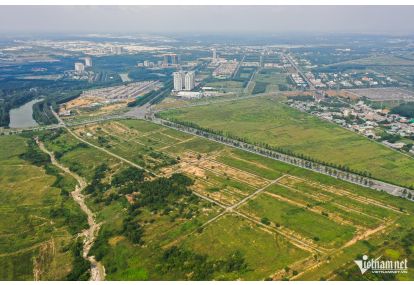
One of the key points of this review is to propose a partial adjustment to the overall planning scheme for Cu Chi District. This adjustment is intended to avoid passing through the area of the 7th Military Region Technical Department (K75 Ammunition Depot), ensuring safety, complying with national defense regulations, and maximizing economic efficiency. The adjustment plan needs to align with local actual conditions while ensuring the best cost-effectiveness and achieving the highest results during the construction process.
Analyze transportation development needs
Regarding the final investment scale of the project, the leadership of the Ho Chi Minh City Department of Transport required the Transport Committee and consulting units to investigate and forecast traffic development needs in a detailed and scientific manner, while also analyzing the investment situation of the regional transport network development. Therefore, the project needs precise calculations to determine the number of lanes and structure, adapting to the expected transport demand around 2045. This aims to ensure the sustainability and feasibility of the project, especially in the context of rapid urbanization and significant increases in traffic flow.
In this process, the plan for transportation demand needs to be carefully constructed, including forecasts up to around 2045, and must take into account the impact of other transport projects such as Ring Road 3, Ring Road 4, the expansion of National Highway 22, and the Tan Son Nhat - Moc Bai railway line. This integration will ensure the connectivity and systematic nature of the transportation infrastructure network, help reduce the burden on the existing system, optimize investment resources, and bring long-term benefits to the overall development of the entire region. At the same time, effective connections between projects are crucial for building a modern and sustainable transportation system.
Phase 1 Investment Plan
The Transport Committee and advisory units are required to formulate investment plans for the first phase of the Ho Chi Minh City - Moc Bai Expressway project. These plans will focus on cross-section structure, lane width, and other technical factors to ensure investment effectiveness and consistency with the investment scale of subsequent completion phases. When selecting the construction plan, technical factors, expansion capability, financial efficiency, and future development potential will be comprehensively considered.
In particular, the financial plan under the public-private partnership (PPP) model is a key issue that needs to be resolved. The Ho Chi Minh City Department of Transport emphasized the feasibility of the PPP model to ensure smooth cooperation between the government and private investors. This model not only helps alleviate pressure on the government budget but also creates opportunities for the private sector to participate in strategic infrastructure projects, thereby bringing significant economic benefits and long-term stability. The project aims to turn the Ho Chi Minh City - Moc Bai Expressway into a traffic artery that not only connects Ho Chi Minh City with Tay Ninh Province but also opens up international trade opportunities through the Moc Bai border gate.
Expected Impact and Benefits
The Ho Chi Minh City - Moc Bai Expressway project is highly anticipated, as it is expected to significantly reduce the traffic burden on the current National Highway 22, thereby markedly improving the quality of transportation infrastructure between Ho Chi Minh City and Tay Ninh. This expressway will help cut travel time, lower transportation costs, enhance the efficiency of goods circulation, and bring numerous benefits to residents and businesses. More importantly, the road holds strategic significance in connecting the northwestern region with Ho Chi Minh City's economic hub, thus strongly driving regional economic development in the fields of logistics and border trade.
In addition to traffic improvements, the project is also expected to have a positive impact on the comprehensive development of the northwestern region, including Tay Ninh and surrounding areas. Convenient access and connectivity will enhance the region's attractiveness to domestic and foreign investors, create more job opportunities, and improve the quality of life for local residents. The project is also a prerequisite for forming satellite cities, helping to divert population from the center of Ho Chi Minh City and promoting sustainable development in the region.
Against the backdrop of the construction of other strategic transportation projects such as Ring Road 3 and Ring Road 4, investment in the Ho Chi Minh City - Moc Bai Expressway project appears particularly necessary. This expressway will play an important role in completing the regional transportation network, supporting auxiliary industries and logistics services, and promoting bilateral trade between Vietnam and Cambodia. This effective connection will contribute to the comprehensive development of the region in terms of infrastructure, economy, and society.
Conclusion
The Ho Chi Minh City - Moc Bai Expressway project is not just a transportation project, but also a strategic project aimed at promoting the economic and social development of Ho Chi Minh City and Tay Ninh. The rapid and effective implementation of this project will bring new development momentum to the region, improve connectivity, and deliver tangible benefits to both urban and rural areas. At the same time, the project will also help alleviate traffic pressure, promote sustainable urban development, and improve the living conditions of millions of residents.
Under the close attention and guidance of city leaders, it is hoped that the Ho Chi Minh City - Moc Bai Expressway project will be completed soon, meeting the people's expectations and actively promoting sustainable development in the region. This not only improves internal connectivity but also provides a key impetus for economic and social development and for enhancing Ho Chi Minh City's position in the region, turning Tay Ninh into one of the emerging development centers of the Southeast region.
#FTT Real Estate Co., Ltd.
(#Real Estate Consulting / #Leasing and Property Management and Sales / #Furniture and Decoration)
LINE official account @ymq0321f|Zalo +886 956 918 888|WeChat
┃Youtube: FTT REAL ESTATE
┃Website : www.fttland.com