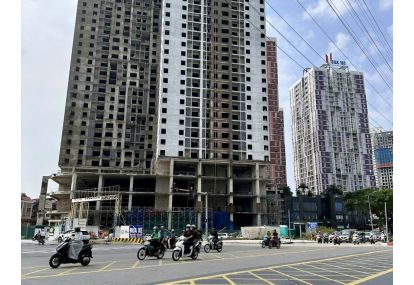
Attention to regulations on calculating land use fees according to the new price list in Ho Chi Minh City
According to the Ho Chi Minh City Tax Department, regulations on calculating land use fees have undergone significant changes, implemented in accordance with Decision No. 79/2024 of the Ho Chi Minh City People's Committee, following the issuance of the new land price list, effective from October 31. The land use term is also set at 70 years to ensure transparency and effectiveness in land management, thereby helping families and individuals grasp information more comprehensively and accurately. These changes are part of the government's long-term strategy to improve the land management system and promote the city's economic and social development, especially in the context of rapid urbanization and increasing land demand.
1. Method for calculating land use fees when converting land use purposes
For families or individuals wishing to convert land use purposes to residential, the land use fee will be determined by the following formula: the land use fee after conversion minus the land use fee or land rent (if any) of the land before conversion. This means the financial obligation to be paid will depend on the difference in land value after the change in use purpose, thereby helping residents optimize costs during the conversion process.
This policy is implemented in accordance with the Government's Decree No. 103/2024, effective from August 1st. The decree also clearly specifies the procedures and formalities for converting land use purposes, including requirements for application documents, processing time, and necessary assessment steps. This specific and detailed information helps residents easily grasp and follow the correct regulations, reducing legal risks and avoiding unnecessary errors in the process of exercising land use rights.
Calculating financial obligations based on these value differences helps establish a fair legal framework, ensuring that residents only pay costs corresponding to the benefits they gain from converting land use purposes. This is not only an effective measure for land management but also helps balance the interests between the state and land users.
2. Flexible provisions in land use fee calculation
Starting from August 1st, the regulations on land prices when converting land use purposes will no longer differentiate between prices within or beyond the quota, regardless of whether the value exceeds 3 billion VND, and will no longer apply to cases of specific land prices. This means that all cases of converting land use purposes will be calculated uniformly, thereby creating a fair and transparent environment when determining financial obligations. Removing the previous restrictions related to land value helps simplify the calculation process and reduces unnecessary complexity for residents and businesses.
The practice of not distinguishing between land within or beyond the limit also helps reduce disputes that may arise from different methods of calculating land value. This ensures that every household and individual can fairly obtain land use rights, regardless of the size of their property value, thereby promoting social equity in accessing and utilizing land resources.
By adopting a unified system of regulations, the calculation of land value and the determination of financial obligations will become more transparent, ensuring consistency and reducing legal loopholes that residents or businesses might exploit. This is an important strategic step in enhancing the efficiency of urban land management.
3. Time point for calculating land use fees
According to Decision No. 79/2024 of the Ho Chi Minh City People's Committee, the time point for calculating land use fees is stipulated as follows:
-
For cases of converting land use purposes, the calculation time point is when the state issues the decision allowing the conversion of use purposes. This means that the land use fee will be determined at the time of the official decision by the competent authority. This helps residents easily determine their financial obligations, avoiding difficulties in calculation and fund preparation due to delays.
-
For cases of recognizing land use rights, the calculation time point is when the household or individual submits complete application documents. This helps ensure that the process of recognizing land use rights proceeds smoothly and quickly, without hindering residents' rights.
Clearly stipulating the time point for calculating land use fees helps all relevant parties, including residents and government agencies, become more explicit and transparent in subsequent steps. This also helps reduce ambiguity in determining the submission time for financial obligations, creating stability and trust for residents, while promoting transparency in land-related administrative procedures.
4. Procedures and formalities for determining land financial obligations
The tax authority will continue to implement the relevant procedures and formalities through the current electronic interconnection system. When there is no basis for calculating land use fees or other amounts payable, within 5 working days from the receipt of the application documents, the tax authority must notify the functional agency in writing for supplementation. This regulation aims to ensure the smooth determination of financial obligations without causing delays and to help residents promptly fulfill their financial obligations.
After receiving sufficient and qualified documents, the tax authority will issue a notice of land use fee payment within a maximum of 5 working days. This process not only ensures transparency but also enhances residents' trust in government agencies. Notifying and fulfilling financial obligations in accordance with regulations helps residents have a clear financial plan and prepare for the amounts due.
Also on October 30, the tax sub-departments will close the system for receiving application documents for land financial obligations through the electronic interconnection system to ensure timely resolution of processes according to legal regulations. This measure of closing the system ensures that all received application documents will be processed on time, avoiding backlogs and delays in processing time, thereby improving administrative efficiency.
The regulations on the time limits for processing application documents and the interconnection steps between functional agencies also help residents better understand the entire process, making it easier to prepare the necessary documents and complete subsequent steps promptly and effectively. This transparency and compliance with regulations help enhance residents' satisfaction and trust while improving the efficiency of land management.
5. Requirements for functional agencies
The Ho Chi Minh City Tax Department requires all tax sub-departments, the Land Tax Management Division, and the Information Technology Division to thoroughly and uniformly implement the above content, ensuring timely and lawful resolution of application documents for land financial obligations. This not only ensures the processing flow of residents' application documents but also helps improve the management efficiency of government agencies.
In addition to following the correct process, functional agencies also need to ensure transparency and accountability in receiving and processing application documents. By implementing the electronic interconnection procedure, the loss of application documents can be reduced, speeding up the resolution progress, thereby creating favorable conditions for residents and businesses in fulfilling land-related financial obligations.
Strengthening the application of information technology and the interconnection and cooperation between functional agencies also helps improve residents' experience, reduce complex administrative procedures, and create favorable conditions for the land management and use process. This aligns with the city's goals of modernization and improving administrative efficiency, ensuring that all relevant parties benefit from these improvements.
Close cooperation between functional agencies and correct implementation of procedures not only help effectively manage land resources but also ensure social equity and create a solid foundation for the sustainable development of Ho Chi Minh City in the future. This reflects the city's firm commitment to improving the quality of state management and better serving residents' needs, thereby enhancing Ho Chi Minh City's status as a smart, modern, and livable city.
#FTT Real Estate Co., Ltd.
(#Real Estate Consulting / #Leasing and Property Management and Sales / #Furniture and Decoration)
LINE official account @ymq0321f|Zalo +886 956 918 888|WeChat
┃Youtube: FTT REAL ESTATE
┃Website : www.fttland.com