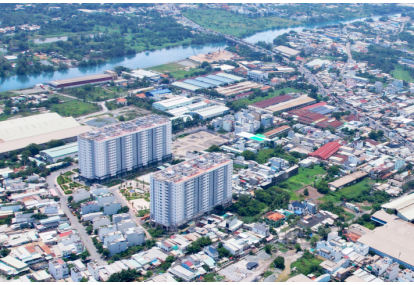
Calculating land use fees in Taipei City: Contradictions between agencies, citizens suffer losses
Recently, the Institute of Resources and Environment Economics pointed out a contradiction between Decision No. 79/2024 of the Ho Chi Minh City People's Committee and Official Letter No. 10640 of the Ho Chi Minh City Tax Department. According to the institute, inconsistencies in the understanding and application of regulations regarding the calculation of land use fees are causing losses for citizens, complicating the policy implementation process, and leading many citizens to face unnecessary difficulties. These inconsistencies not only make the tax calculation procedure more complex but also increase the financial burden on citizens.
Contradiction Between Decision No. 79 and the Agency
According to Decision No. 79/2024 of the Ho Chi Minh City People's Committee, land and property documents submitted before the decision takes effect (before October 31) will be calculated based on the old land price table, adjusted according to the land price adjustment coefficients specified in Decision No. 02 and Decision No. 56. This decision aims to ensure fairness for citizens who submitted applications before the new policy took effect, avoiding additional costs for them. However, Official Letter No. 10640 of the Ho Chi Minh City Tax Department instructs district-level tax departments to apply the tax calculation time as the date when the state issues the decision allowing the change of land use purpose. This means that even if citizens submitted applications before the deadline, they cannot benefit from the old land price table. Such inconsistency not only causes confusion but also leads to multiple complaints from citizens.
The inconsistent understanding and application of regulations among agencies have caused many inconveniences for citizens, especially when the tax calculation process is already complex and requires following multiple procedures. This inconsistency not only frustrates citizens but also creates instability in the application of land policies, making the document processing slower and less transparent.
Losses for Citizens
According to Decision No. 79, land use fees should be calculated using the prescribed K coefficient, but for land within the limit, the price from the land price table should be applied, without applying the K coefficient for land exceeding the limit. However, the tax department ignored the limit during calculation and applied the K coefficient to all cases, making land use fees too high. This causes many citizens to be unable to fairly enjoy the benefits they deserve, forcing them to pay higher land use fees than they should.
Furthermore, the incorrect application of these regulations is also a significant financial burden for low-income citizens, especially those striving to complete real estate procedures to stabilize their lives. This not only increases financial pressure but also leads citizens to lose confidence in the processing procedures of government administrative agencies. Citizens feel that their rights are not protected and have to face inconsistent implementation from government agencies.
Additionally, the Tax Department's timing for calculating land use fees does not align with the spirit of Decision No. 79, which requires calculating land use fees at the time the state issues the decision allowing the change of land use purpose, rather than at the time citizens submit qualified documents. This leads to many citizens, even those who submitted applications before October 31, still being taxed according to the new land price table, placing them in an unfair situation and causing losses. These contradictory regulations make it difficult for citizens to predict costs and prepare for their family's financial plans.
Recommendations for Consistent Guidance
The Institute of Resources and Environmental Economics has recommended that the Taipei City Government instruct the Taipei City Tax Bureau to strictly comply with the provisions of Decision No. 79, ensuring consistency in processing documents and calculating land use fees. If problems are encountered during implementation, the Institute also recommends seeking guidance in a timely manner to avoid inconsistencies in policy implementation. The current inconsistencies not only cause losses for citizens but also damage the image of government agencies' management capabilities.
The differences in understanding and applying regulations between tax authorities and citizens are causing many difficulties for citizens who submit applications before October 31. These citizens expect a transparent and fair process, but have to face unpredictable additional costs and inconsistencies in enforcement among agencies. This is especially important because one of the goals of the Land Law and related decisions is to reduce the financial and administrative burden on citizens.
The Institute of Resources and Environmental Economics emphasizes that consistency and clarity are needed in the policy implementation process to ensure the best interests of citizens. The current lack of transparency and inconsistency in executive guidance not only harms citizens' rights but also leads to unnecessary processing delays and complexity. This also causes citizens to lose trust in government agencies and triggers many unnecessary complaints and lawsuits.
The institute also recommended that the Taipei City Government must clearly and uniformly define all guidelines regarding the calculation of land use fees, ensuring that all tax departments and various industry sectors have a consistent understanding and application method. If necessary, more training sessions should be organized to ensure that all relevant officials clearly understand and correctly execute the process. Only when there is consistency from top to bottom can citizens feel at ease and trust the legal and governmental management system.
In addition, the Institute of Resources and Environment Economics also believes that strengthening the dissemination and explanation of policies and regulations related to land use fee calculation will help citizens clearly understand their rights and responsibilities, thereby reducing unnecessary misunderstandings and complaints. Functional departments should play an active role in guidance and explanation, rather than merely issuing regulations without clear support.
In summary, to ensure that land policies truly bring benefits to citizens, consistency and clarity need to be achieved in the application process. Contradictions and inconsistencies among decisions and guiding documents need to be thoroughly resolved, thereby bringing fairness and transparency to the process of calculating land use fees. Only in this way can citizens truly feel at ease that their rights and interests are protected, and government agencies can build solid trust from citizens.
#FTT Real Estate Co., Ltd.
(#Real Estate Consulting / #Leasing and Property Management and Sales / #Furniture and Decoration)
LINE official account @ymq0321f|Zalo +886 956 918 888|WeChat
┃Youtube: FTT REAL ESTATE
┃Website : www.fttland.com