Expanding land policies for commercial housing projects raises concerns: Can it solve the housing problem for low-income groups?
Regarding the policy to expand land use for commercial housing projects, a proposal put forward by the government in a draft proposal, is currently attracting attention and heated discussion in the National Assembly. Although the main purpose of this policy is to address some difficulties in the real estate market, particularly for commercial housing projects, it has raised many questions about its long-term impact, especially regarding social housing. Many National Assembly delegates believe that this policy fails to adequately consider the needs of this sector.
Current status of the real estate market and social housing
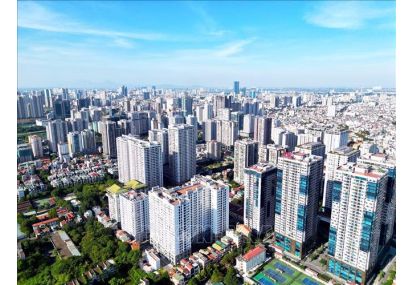
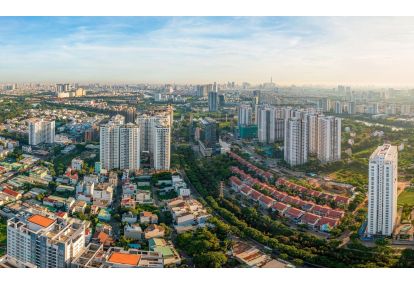
Before delving into the proposal, it is necessary to first review the current state of Vietnam's real estate market, especially in the two sub-sectors of commercial housing and social housing. Although the real estate market has boomed in recent years, the sharp rise in housing prices has made it impossible for low- and middle-income groups to afford homes. Workers with monthly incomes ranging from 7 million to 20 million VND, who have a genuine need for housing, struggle to afford suitable homes. Affordable housing, particularly social housing, has always been in a state of 'hunger,' but there are many obstacles in the allocation process and related policies for social housing, failing to effectively meet the actual needs of citizens.
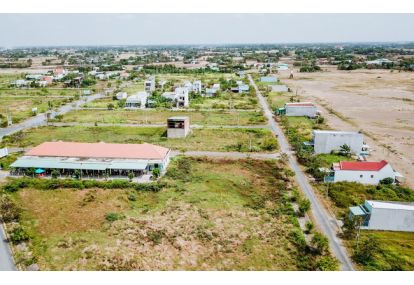
Furthermore, another contradiction is also very serious: many urban communities and commercial residential areas built on a large scale lack residents after completion. These residential areas are finished and ready for occupancy, but they fail to attract residents, leading to many projects being left idle or sold at low prices to attract buyers. This phenomenon, to some extent, reflects the imbalance between supply and demand in the real estate market.
Proposal to Expand Commercial Housing Land and Concerns
The government has proposed expanding the land scope for commercial housing projects by using a pilot mechanism to convert agricultural land and non-agricultural land (excluding residential land) into land for commercial housing construction. The aim of this proposal is to address the shortage of residential land in some areas, especially in undeveloped regions, while also promoting the development of the real estate market and reducing various obstacles in the progress of commercial housing projects.
However, this proposal did not receive support from all National Assembly delegates. Standing Committee member Nguyen Cong Long expressed concerns about this policy, arguing that in Vietnam's current environment, the government is only focused on removing restrictions on commercial housing projects but lacks strong measures to promote social housing development. Nguyen Cong Long believes that for many low-income workers and state agency employees, housing remains a difficult problem to solve. He pointed out that for a state agency employee, even if they barely eat or drink, it might take hundreds of years to afford a house.
Similarly, member of the Committee for Culture and Education Do Huy Khanh also expressed concerns, emphasizing that many built urban communities are still empty, causing a waste of resources. He believes that the government should use land for developing social housing, which is the fundamental solution to truly meet the housing needs of low-income groups. According to him, the current demand for social housing is very large, especially for workers with monthly incomes between 7 million and 20 million VND, who want a suitable place to live but cannot afford commercial housing.
Where is the solution for social housing?
Another important issue raised by National Assembly delegates is why not use land resources and policy mechanisms for developing social housing instead of focusing only on commercial housing projects. Do Huy Khanh pointed out that many areas now have commercial residential zones with no shortage of housing, but in reality, low-income groups still cannot afford a suitable place to live. Therefore, the policy of converting agricultural or non-agricultural land into commercial housing land should be accompanied by strengthening social housing policies, so as to balance demand and truly help those in need.
Also supporting this view are National Assembly delegates Pham Van Hoa (Dong Thap province) and Trinh Xuan An (member of the Committee for National Defense and Security), who support the policy of piloting the expansion of land use scope nationwide, arguing that piloting only in some provinces and cities would lead to unfairness and create 'dependency relationships', making the market lose a fair competitive environment. However, Pham Van Hoa also emphasized that not all projects should be included in the pilot policy, especially those that have not yet resolved violations should not be applicable.
The Ministry of Environment and Land Resources' Position
Minister of Land Resources and Environment Do Duc Duy responded to the delegates' questions at the meeting, explaining the substance of this policy. He stated that expanding commercial housing land is to address the lack of land in some places, especially for large real estate projects that do not reach 20 hectares. According to the 2024 Land Law, only projects larger than 20 hectares can undergo land acquisition and auction, but currently many real estate projects in various places are smaller than 20 hectares, making land supply a bottleneck.
Do Duc Duy also stated that all projects under the pilot policy must follow land planning, ensuring they do not affect the protection of farmland and forests. He emphasized that the government will strictly control the land conversion process to avoid any policy being abused.
Conclusion
The proposal to expand land for commercial housing projects sparked intense debate within the National Assembly. Although the move aims to boost the real estate market, many delegates believe it does not address the housing problems of low-income groups. Many worry that if the development of social housing continues to be neglected, it will worsen the housing issues for the poor. How to balance the needs of social housing while promoting market development will be key to future policy adjustments. The National Assembly will vote on the proposal on November 30, and the outcome remains to be seen.
#FTT Real Estate Co., Ltd.
(#Real Estate Consulting / #Leasing and Property Management and Sales / #Furniture and Decoration)
LINE official account @ymq0321f|Zalo +886 956 918 888|WeChat
┃Youtube: FTT REAL ESTATE
┃Website : www.fttland.com