Land bought and sold with handwritten documents can obtain a property certificate
Land transactions with written contracts can receive the 'red book': Opportunities and challenges from Decree No. 151/2025 and the 2024 Land Law
New regulation: Extending the legalization deadline for written transactions
From August 1, 2024, the 2024 Land Law officially took effect, and the government also promulgated Decree No. 151/2025, regulating the division of powers between two levels of local government, as well as decentralization and graded management in the land sector. The most notable highlight is the extension of the deadline for recognizing transactions with written documents (paper agreements for land sales).
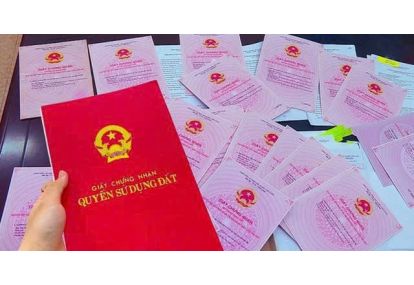
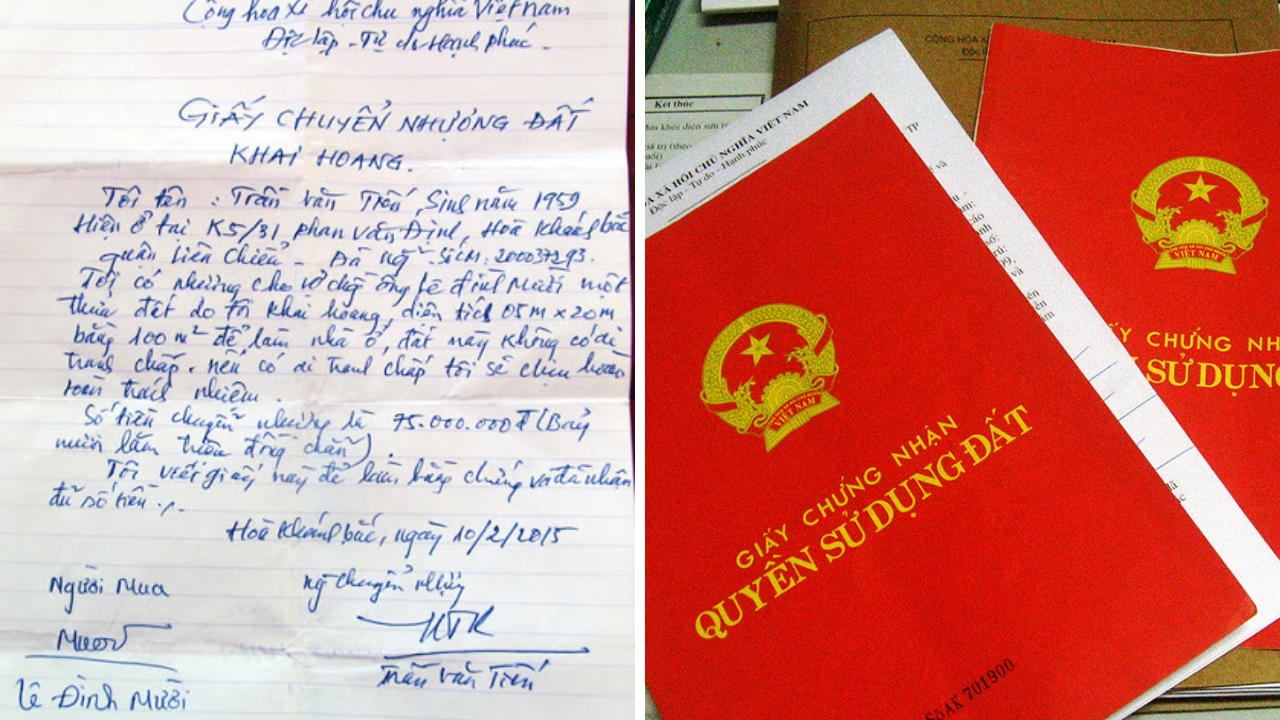
According to the new regulation, anyone who bought or sold land in black and white before August 1, 2024 can apply for a certificate of land use rights, house ownership, and ownership of attached assets (commonly known as the 'red book'). This policy is more lenient than before, as previously only transactions up to July 1, 2014 were recognized.
In other words, a large number of black-and-white land transactions between 2014 and 2024 are now officially recognized by the state, helping to stabilize land use relationships and reduce disputes.
Original image: images2.thanhnien.vn
Inheriting and expanding the spirit of the old law
Master of Commercial Law from Ho Chi Minh City University of Law, Ngo Gia Hoang, pointed out that this regulation essentially replaces Article 42 of Decree No. 101/2024, while inheriting and expanding previous relevant regulations, such as Decree No. 84/2007, Decree No. 43/2014, and Decree No. 01/2017.
The new regulation also covers cases with or without land ownership documents, as long as they comply with the spirit of Article 137 of the 2024 Land Law, the red book can still be issued. In addition, the regulation requires public announcement and display at the communal-level People's Committee, which not only recognizes past transactions but also prevents risks, avoids disputes, and protects the legitimate rights and interests of both buyers and sellers.
Benefits for the people and the government
Experts generally believe that recognizing black-and-white transactions brings multiple benefits:
-
For the people: rights are protected, housing is stable, and there is no need to worry about transaction risks.
-
For the government: it helps with land management, as all land will be digitized and named, no longer existing outside the law.
-
For society: disputes are reduced, and the real estate market becomes healthier and more transparent.
Former Deputy Minister of Natural Resources and Environment, Professor Dang Hung Vo, commented: 'Even for black-and-white transactions, if they comply with planning and have no disputes, the red book should still be issued to the people. This is an important step for social stability.'
Challenge: procedures remain complex
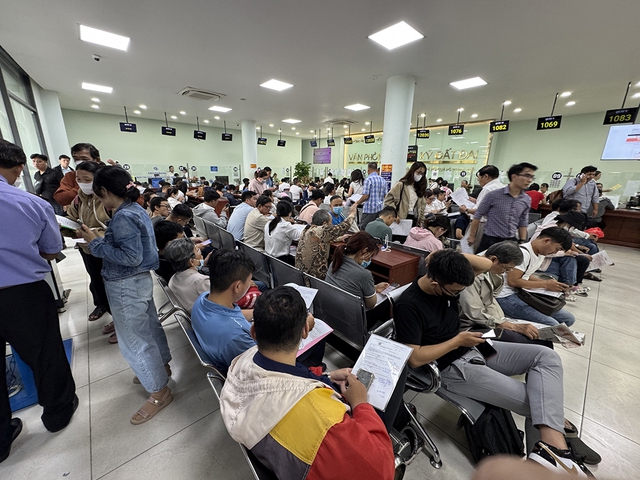
However, challenges remain. Current procedures are still not simple enough; citizens need to prepare a large number of documents, make multiple trips, and processing times often exceed the stipulated period.
In addition, extending the recognition period may also inadvertently encourage people to continue buying and selling with black-and-white paper. Therefore, it is necessary to synchronize:
-
Codify regulations into law to avoid overlapping subordinate regulations.
-
Simplify procedures and establish clear and transparent processing steps.
-
Strengthen communication and supervision, on one hand protecting people's rights, and on the other hand raising awareness of law compliance.
Original image: imgamp.phunutoday.vn
Special cases
-
If it involves agricultural land that was subdivided and sold for house construction, and was transacted in black-and-white before July 1, 2014, it can still receive a red book, provided it complies with planning, has no disputes, and is supported by evidence such as payment of non-agricultural land tax, temporary residence registration, and electricity registration.
-
For black-and-white purchases of agricultural land after July 1, 2014, with private house construction, they are currently not included in the scope for red book issuance. However, such cases are very common in large cities (e.g., Ho Chi Minh City), and more specific regulations will be needed in the future to address them.
From August 1, 2024: Notarization required
Another key change is that from August 1, 2024, all land transactions must be signed in a written contract, notarized or certified, and completed with land registration changes before the law recognizes them. This marks Vietnam's gradual departure from 'black-and-white paper' transactions, moving toward transparency in the real estate market.
Decree No. 151/2025 and the 2024 Land Law provide an opportunity for millions of black-and-white land transactions before August 1, 2024 to be legalized and obtain red books. This is an important measure to protect people's rights, but to truly implement it, the government still needs to simplify procedures, improve legislation, and strengthen supervision to avoid policy abuse. This is also a significant step for Vietnam toward transparent and modern land management.