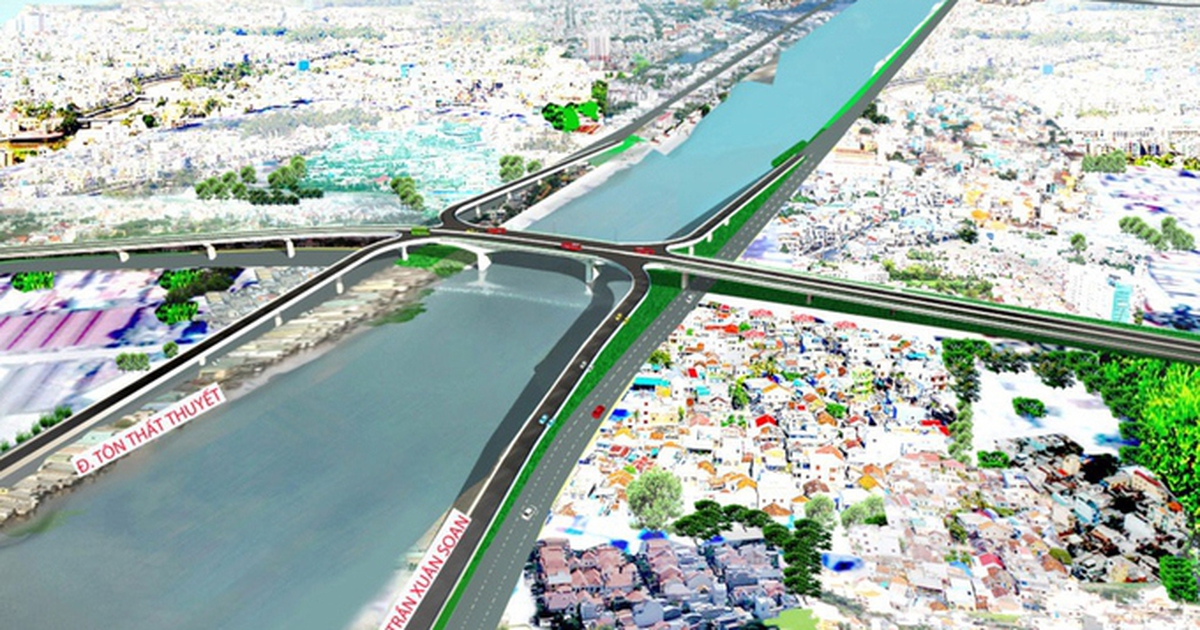
The Nguyen Hoai Bridge road project, the Ho Chi Minh City–Moc Bai Expressway, and Ring Road 2 in Ho Chi Minh City will start construction simultaneously.
Ho Chi Minh City will start and complete multiple major projects on December 19: Real estate will see a new wave of growth momentum in 2025–2030
The Ho Chi Minh City People's Committee recently announced several major infrastructure projects that will hold groundbreaking and completion ceremonies on December 19 to welcome the 14th National Congress of the Communist Party of Vietnam. This is the largest infrastructure development period in recent years, covering transportation, environmental improvement, public facilities, and healthcare and education sectors.
Experts point out that this large-scale infrastructure development will not only improve traffic bottlenecks and the urban environment but also become an important driving force for urban spatial restructuring and real estate appreciation.
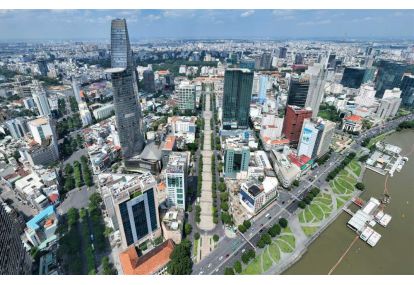
Original image: smartland.vn
1. Multiple major projects about to start construction
1. Metro Line 2 (Ben Thanh – Tham Luong)
This route connects the center of Ho Chi Minh City with the northwestern gateway and is a key project to alleviate long-term congested roads such as Truong Chinh and August Revolution Avenue.
Impact on real estate:
-
Properties around metro stations are expected to increase by 10%–25% (2025–2028).
-
Benefited areas include: Ben Thanh Market, Democracy Roundabout, Hoa Hung, Lang Cha Ca, Ba Que, Binh Thanh and Tan Binh, and parts of Tan Phu.
2. Nhieu Loc–Thi Nghe Canal dredging and renovation project (Ninh Lo–Thi Nghe Canal → Ba Thoat River)
This project has been delayed for over 20 years and is a long-awaited key project for local residents, which will thoroughly improve pollution and flooding issues.
Impact on real estate:
-
The riverside areas passing through Binh Thanh District and Go Vap District will see comprehensive improvements in quality of life.
-
Land prices on both sides of the river are expected to rise by 20%–30%.
3. Environmental improvement project for the old north bank of District 8 (North Bank Canal)
This area is one of the most flood-prone zones in Ho Chi Minh City. The project will improve flood control, open up roads, and release space for riverside development.
Impact on real estate:
-
District 8 has historically had low prices due to underdeveloped infrastructure, making it a typical 'undervalued' area.
-
After completion, property prices are expected to rise by 15%–25%.
II. Key transportation projects about to begin
1. Remaining sections of Ring Road 2 (Phu Huu Bridge → Vo Nguyen Giap → Pham Van Dong)
The ring road will fully connect the northeast, south, and other districts, serving as a core road to alleviate traffic in the city center.
Impact on real estate:
-
The biggest beneficiaries are Thu Duc City, Binh Thanh, and Go Vap District.
-
Especially in some sections of Thu Duc City, prices are expected to rise by 10% to 20% within 3 years.
2. Ho Chi Minh City – Moc Bai Expressway (Phase 1)
This expressway connects Ho Chi Minh City with the international border gate of Moc Bai, which is of great significance to logistics, industry, and tourism.
Impact on real estate:
-
Land in Hoc Mon, Cu Chi, and Tay Ninh Province will benefit.
-
Commercial and industrial land and residential properties are expected to see a 15% to 25% increase.
3. Nguyen Hue Bridge – Road Project (District 1 – District 4 – District 7)
This project will significantly improve traffic congestion from District 1 to the southern area (especially Phu My Hung), replacing the long-overloaded Kenh Bridge.
Impact on real estate:
-
District 4 will see the largest increase, estimated at 8% to 15%.
-
The reduced commute time from District 1 to District 7 will help enhance the overall attractiveness of District 7 and the Phu My Hung area.
4. Ring Road 3 (30 km) Technical Opening (Thu Duc City: Long Truong, Long Phuoc, Long Binh)
This section is located in the fastest-developing area of Ho Chi Minh City and will create regional connectivity with Binh Duong, Dong Nai, and Long Thanh.
Impact on real estate:
-
Thu Duc City, Binh Duong Province, Dong Nai Province, and Long Thanh will all see price increases.
-
The overall expected increase for the region is 10%–25%.
3. Healthcare, Education, and Public Construction (Group B Projects)
Including:
-
Second Campus of 115 Emergency Center
-
Quality Control Center for Testing
-
Upgrade Project for Tran Van Du High School
-
Phase 2 of Nhan Ai Hospital
-
Equipment Upgrade for Nguyen Trai Hospital
-
Tropical Disease Center at the First Campus of Children's Hospital
-
Widening of the connecting road from Long Thanh Expressway to Ring Road 2
Real Estate Impact:
-
Residential demand in the surrounding area is stable, with an expected increase of 5%–10%.
-
After the improvement of the Long Thanh expressway connecting road, there are clear benefits for An Phu, the southern part of Thu Duc City, and Nam Binh Thanh.
4. Group C livelihood projects: parks and convenient bridges
Including:
-
Thanh Loc Park
-
Heng Canal Bridge No. 1 in Phu Dinh Ward (Hoai Thanh Road)
Real Estate Impact:
-
Parks and convenient bridges improve the living environment, enhancing the attractiveness of District 12 and Binh Tan District.
-
Expected increase of 5%–12%.
Original image: images2.thanhnien.vn
5. Real estate market summary: which areas are rising the most?
High increase (20%–30%):
-
Thu Duc City (Long Truong, Long Phuoc, Long Binh) – benefits from Ring Road 3 and Ring Road 2
-
District 4 – parts of District 7 – Nguyen Hoai Bridge project
-
Binh Thanh – Go Vap District – Through-the-Center Canal renovation
Moderate increase (10%–20%):
-
North Bank of District 8
-
Tan Binh, Tan Phu (Metro Line 2)
-
Phu My Hung, South New City
Spillover effect (5%–15%):
-
Long Thanh, Nhon Trach, Tan Su (Ring Road 3)
-
Cu Chi, Hoc Mon, Tay Ninh (Moc Bai Expressway)
-
District 12, Binh Tan (Group C projects)
Conclusion
The major projects launched and completed on December 19 will comprehensively enhance Ho Chi Minh City's transportation structure, flood control capacity, and public resource allocation, laying a key foundation for the city's development from 2025 to 2030.
This also means: a new round of real estate appreciation cycle officially begins.
For Taiwan investors, areas along metro lines, around ring roads, and in river improvement zones will be the investment focus for the next 3 to 5 years.