Vingroup's proposed Can Gio metro line, costing 4 billion USD
Vingroup proposes investing in a 48.5 km metro line connecting Ho Chi Minh City center with Can Gio District, with a total investment of over $4 billion
Strategic metro to Can Gio Ocean New City
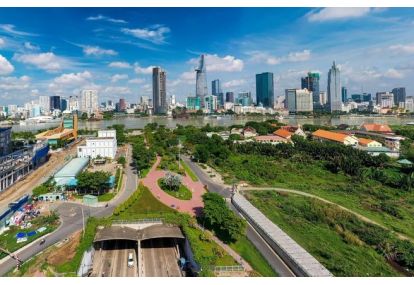
According to the Ho Chi Minh City Department of Transport (Sở GTCC), Vingroup has submitted a preliminary investment plan to build a metro line from the Ho Chi Minh City center to Can Gio District. This will be one of the largest infrastructure projects in southern Ho Chi Minh City, seen as an important driving force for the development of the Can Gio reclaimed new city and the coastal area's economy.
The metro line is 48.5 km long, elevated, with a maximum speed of 250 km/h. The entire line has 2 stations (the starting station is Tan Thuan An Phu Station in District 7, and the terminus is Can Gio Station), plus 2 depots: one on 39 hectares of land in Long Hoa Commune, Can Gio, and another on 20 hectares of land in Binh Thuan Ward, District 7. The total investment is approximately 102,370 billion VND (about $4.09 billion).
Original image: images2.thanhnien.vn
Detailed route plan
According to the design, the metro line will:
-
Start from Nguyen Van Linh Boulevard (the section where Nguyen Thi Thap Street and Ly Phuoc Man Street intersect);
-
Run along the central green belt of Nguyen Van Linh Boulevard, then turn left onto Nguyen Luong Bang Boulevard – Road 15B – Road D1;
-
Cross the Nhat Diep River Bridge to enter the Hong Linh Resettlement Area – Tan Phu District, then continue straight to the Van Phat Hung Resettlement Area – Tan Phu District;
-
After crossing the Soai Rap River, run parallel to the Bien Hoa – Long Thanh Expressway to Lam Sa Boulevard, then turn right and follow Lam Sa Boulevard straight to Can Gio Center.
This metro line will directly connect District 7 – Tan Phu District – Can Gio District, significantly shortening the travel time that currently relies entirely on road transport, and is considered a strategic transportation corridor for southern Ho Chi Minh City.
Original image: smartland.vn
Driving real estate and urban development
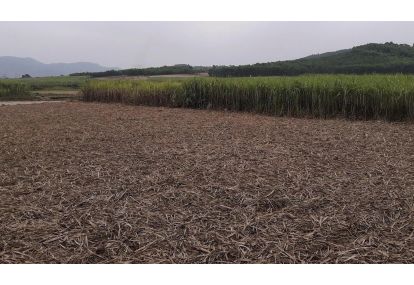
Ho Chi Minh City's planning goal is to turn Can Gio into an international-class eco-marine tourism and leisure city, so the construction of the elevated metro is considered necessary and feasible.
This project will bring a huge boost to the real estate market:
-
District 7: Already a high-end residential hub thanks to Phu My Hung, with a direct metro line to Can Gio, its future value is expected to continue rising.
-
Tan Phu District: Resettlement and new urban areas such as Van Phat Hung and Hong Linh will transform into transit hubs along the metro line, with land and residential project values bound to increase.
-
Can Gio District: Previously lacking infrastructure, after the metro opens, it will transform into Ho Chi Minh City's 'marine tourism gateway', driving the value of land, resort villas, and new coastal reclamation urban projects.
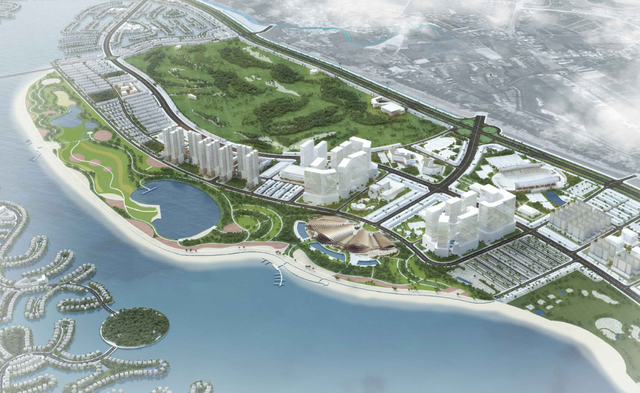
Especially the upcoming Can Gio Reclaimed New City, which will become a direct connection point for the metro, is seen as the new core of Can Gio in the future, offering golden opportunities for investment in marine leisure, commercial, and residential real estate.
Original image: images2.thanhnien.vn
Implementation timeline
The Ho Chi Minh City Department of Transport (Sở GTCC) recommends that the city government adopt the PPP (Public-Private Partnership) model, with Vingroup preparing the feasibility study report and submitting it to the competent authorities for approval.
-
2025: Complete the preliminary feasibility study report, submit it for approval, and incorporate it into the urban rail transit plan;
-
2026: Commence land acquisition and compensation for relocation, and officially start construction;
-
2028: Complete construction, conduct trial runs, and hand over for operation.
The Ho Chi Minh City–Can Gio metro project proposed by Vingroup will not only thoroughly improve the traffic problems in southern Saigon but also serve as a key step in elevating Can Gio to an international marine city. With a total investment of over 4 billion USD, it is expected to ignite a real estate boom along the route, especially in District 7, Tan Phu District, and Can Gio, making them the focus of Ho Chi Minh City's future 'coastal city strategy'.