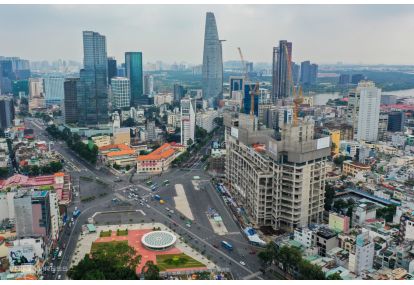
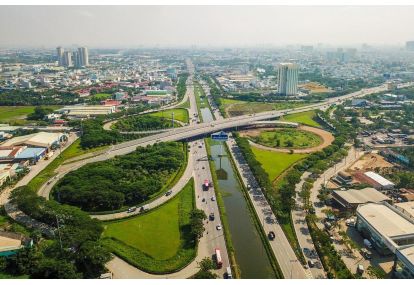
Signs of a positive turnaround in the real estate market: new opportunities for investors
Against the backdrop of macroeconomic uncertainties and internal challenges, Vietnam's real estate (BĐS) market is currently showing encouraging signs of reversal, opening up prospects for recovery and development for investors and businesses. Data from Batdongsan.com.vn shows that in the third quarter of 2024, interest in real estate grew significantly compared to the same period in 2023: land up 49%, detached houses up 25%, apartments up 24%, and villas up 22%. This not only reflects the restoration of market confidence but also indicates a successful restructuring of certain real estate segments. The absorption rate of many newly launched projects has increased from 30-60% to over 80%, further confirming this trend and bringing encouragement to investors and project developers.
Mr. Nguyễn Quốc Anh, Deputy General Director of Batdongsan.com.vn, stated that the real estate market has passed its most difficult period and is gradually moving toward stability. The recent passage of three important laws—the Land Law, the Housing Law, and the Real Estate Business Law—is expected to enhance market transparency and fairness, further strengthening investors' confidence in the legal framework and the business environment. The improvement of the legal framework not only helps attract more social housing supply but also supports the growing housing demand of residents, especially in major cities like Hanoi and Ho Chi Minh City. Support policies, including lower mortgage interest rates, extended repayment periods, and promotion of social housing construction, have created more favorable conditions, thereby driving demand and helping to bring the market back onto a sustainable development track.
Dr. Cấn Văn Lực, Chief Economist at BIDV, believes that the recovery process of the real estate market is progressing slowly and remains uneven across regions and property types. New land pricing regulations, combined with improvements in the legal framework, have enhanced market transparency and safety while helping to control speculation. This not only protects the interests of both buyers and sellers but also ensures balanced and sustainable development of the real estate sector. However, to maintain this recovery momentum, real estate enterprises need to proactively diversify funding sources, manage financial risks, and adjust prices according to the current market context, where interest rates and exchange rates still carry fluctuation risks.
One of the key issues currently facing the real estate market is capital. Against a backdrop of significant volatility in the international financial system, businesses need to adopt flexible financial strategies and diversify funding sources to ensure sustainable development. Cooperating with domestic and international investment funds and international financial institutions not only helps businesses solve capital problems but also opens up new development opportunities, enabling the development of large-scale, complex projects to meet the ever-growing market demand. To this end, businesses need to formulate detailed and rigorous plans, including controlling cash flow risks, optimizing interest rates and exchange rates, and leveraging government support programs to create favorable conditions for the development process.
Furthermore, financial policies, the legal framework, and the push for public investment play an important role in supporting the recovery of the real estate market. Many experts expect that by the end of 2024, with macroeconomic improvements and government stimulus measures, the market will continue to show positive signals. This is a golden opportunity for investors to optimize their strategies, enhance market competitiveness, and capitalize on policy advantages. Adjusting investment strategies according to the new situation, seeking potential market segments, and cooperating with strategic partners will help real estate businesses optimize operational efficiency.
According to a report by the Vietnam Association of Realtors (VARS), the market's recovery process will be more evident in 2025, thanks to stable economic development, improved credit conditions, and the maintenance of low lending rates. The accelerated disbursement of public investment has created a favorable environment for the restoration and development of real estate projects. New regulations such as the 2024 Land Law, the 2023 Housing Law, and the Real Estate Business Law not only provide a solid legal foundation but also help enhance transparency and protect the rights of all market participants, including investors, homebuyers, and real estate developers.
Real estate businesses have also accelerated cooperation with relevant agencies to resolve legal bottlenecks and process procedures for projects that have not yet been approved. This is an important foundation for investors to confidently launch new projects, while also creating momentum for capital to continue flowing into the market. With an improved legal framework and supportive fiscal policies, Vietnam's real estate market is becoming more attractive, not only to domestic investors but also to international investors interested in long-term investment.
Overall, Vietnam's real estate market is facing a period full of potential, with opportunities for recovery and strong development. To seize and optimize these opportunities, businesses and investors need to proactively adjust their strategies to adapt to market changes. Enhancing management capabilities, standardizing operational processes, and investing in the development of high-quality human resources will be key factors for businesses not only to overcome current challenges but also to move towards sustainable development in the future.
#FTT Real Estate Co., Ltd.
(#Real Estate Consulting / #Leasing and Property Management and Sales / #Furniture and Decoration)
LINE official account @ymq0321f|Zalo +886 956 918 888|WeChat
┃Youtube: FTT REAL ESTATE
┃Website : www.fttland.com