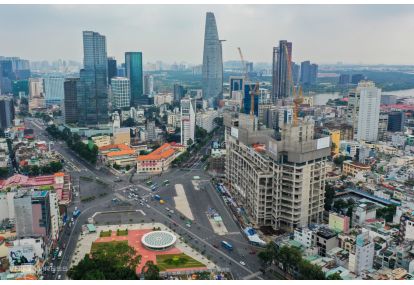
Reasons for rising house prices despite a quiet real estate market
Over the past period, Vietnam's real estate market, especially in major cities like Ho Chi Minh City and Hanoi, has recorded significant increases in housing prices, even though transaction activity in the market has generally been less active, showing a relative state of stagnation. This raises a complex question: what are the core reasons behind this rise in housing prices? So, where exactly does the root of this situation lie?
One of the main reasons for the rise in housing prices is a severe shortage of supply. Due to difficulties in legal and administrative procedures, new projects from planning approval to construction permits have faced continuous delays or even failed to receive approval, leading to an increasingly scarce supply of real estate, especially housing. Meanwhile, demand for housing continues to grow, particularly in areas experiencing rapid urbanization. This creates a clear imbalance between supply and demand, further pushing up housing prices. Especially in central urban areas, the shortage of land supply exacerbates the scarcity. Additionally, social housing and affordable housing, which were originally solutions for low- and middle-income groups, face many challenges in their implementation, leaving those with actual needs with limited options.
Furthermore, input costs in the construction process and land price factors also have a significant impact on the rise in housing prices. Prices of construction materials such as steel and cement have been on an upward trend due to global economic changes, including inflation and supply chain disruptions. Supply chain disruptions caused by global trade tensions and the COVID-19 pandemic have also pushed up transportation costs. These factors, combined with rising land prices in central areas and regions with potential for infrastructure development, have led to substantial increases in construction costs. The development of major infrastructure, such as metro lines, highways, and new bridges, has enhanced the land value of surrounding areas, thereby further driving up housing prices. These costs are ultimately passed on to housing prices, placing a heavy cost burden on homebuyers.
Speculative factors are also an important element that needs careful consideration. Against the backdrop of an inactive market, investors see this as an opportunity to accumulate assets, wait for housing prices to rise, and then sell for profit. This speculative mentality puts upward pressure on housing prices, even though actual housing demand has not increased correspondingly. A large amount of housing is held by speculators without being put into use, creating an artificial shortage of supply and causing real estate values to be pushed above their actual worth. Additionally, the participation of foreign investors has also intensified market pressure, as they are optimistic about Vietnam's long-term economic growth potential and seek to invest in real estate as a means of preserving value.
Financial policies also play an extremely important role in this context. Credit tightening in the real estate sector has made it difficult for many projects to raise funds. This leads to new projects struggling to get off the ground, further exacerbating the supply shortage. The government's credit control measures aim to curb inflation, but they also reduce loan accessibility for potential homebuyers, especially first-time buyers, making it harder for them to finance their home purchases. Moreover, rising interest rates have prompted many investors to shift their funds into real estate as a way to preserve value, particularly in stable, low-risk housing types, thereby further intensifying pressure on housing prices.
Unavoidably, the psychological factor of investors and residents must be mentioned. Against the backdrop of other investment channels such as securities or bank deposits becoming unstable, real estate is considered a safe and effective investment channel to meet the need for asset preservation against inflation. This psychology increases the demand for real estate investment, even though prices are already very high, which further adds to the upward pressure on prices. Many residents also tend to view real estate as a future safeguard of property, and the stability of real estate compared to other financial assets further consolidates people's confidence in investing in this sector.
Overall, the rise in housing prices against the backdrop of a calm real estate market is the result of multiple intertwined and complex factors. Insufficient supply, rising input costs, speculative psychology, and the impact of financial policies have all combined to cause this phenomenon. Additionally, the psychology of value preservation, uneven housing distribution, and supply chain disruptions have further exacerbated the severity of the problem. To address these challenges, comprehensive collaboration among the government, businesses, and the public is needed. The government needs to reform legal policies, accelerate project approval processes, and strengthen support for social housing and affordable housing. Businesses need to seek construction cost optimization and improve project implementation processes. Residents also need to change their mindset, shifting from speculation to genuine home buying, which helps stabilize the market and provides housing opportunities at reasonable prices for everyone. This may include encouraging development in non-central areas to reduce pressure on major cities and more evenly distribute housing supply.
#FTT Real Estate Co., Ltd.
(#Real Estate Consulting / #Leasing and Property Management and Sales / #Furniture and Decoration)
LINE official account @ymq0321f|Zalo +886 956 918 888|WeChat
┃Youtube: FTT REAL ESTATE
┃Website : www.fttland.com