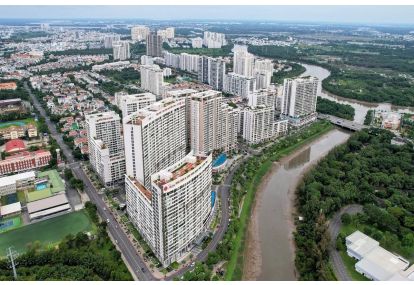
Concerns about a 'land fever' regarding the expansion of commercial and residential land pilot projects
The pilot work of expanding agricultural and non-agricultural land for commercial residential development has drawn deep attention from National Assembly deputies, especially regarding the 'wave' that could lead to widespread increases in land prices, as well as the risk of creating significant obstacles for enterprises that need land for production and business operations. Deputies worry that without appropriate control measures, this expansion could lead to chaos in the land market, causing land prices to rise unreasonably and resulting in unpredictable consequences for long-term economic development planning.
Deputy Ha Sy Dong from Quang Tri province expressed support for the proposal to expand land resources for commercial residential use, while emphasizing the importance of carefully evaluating the efficiency of existing land resource utilization. He believes that land use must be strictly supervised to ensure transparency, preventing policy abuse for private gain and minimizing land speculation, which could cause real estate prices to exceed control, disrupt the market's supply-demand balance, and lead to instability.
Deputy Ha Sy Dong also suggested that the pilot should be implemented in areas with urgent demand for commercial residential projects and where there are difficulties in advancing projects under current regulations, rather than rolling it out universally. This would not only ensure fairness among localities but also help the government collect practical data to evaluate and adjust policies based on evidence, thereby minimizing the risks of unstable real estate development.
Risk of land price increases
Deputy Nguyen Phuong Thuy from Hanoi, Vice Chair of the National Assembly's Legal Committee, also emphasized a similar view, warning that expanding commercial residential land could trigger a wave of land speculation, causing land prices to rise uncontrollably. Against the backdrop of rapidly soaring land prices and a lack of effective control measures, Deputy Nguyen worries that the pilot expansion of land for commercial use could lead to a real estate bubble. Once the bubble bursts, its negative effects would not only impact the real estate market but also spread to other economic sectors, causing significant losses to the economy.
She emphasized that if the process is not implemented with caution, the 'land fever' will become a major obstacle for businesses that need land for production and operations. Many investors concentrate on buying land with the aim of converting it into commercial housing, which will drive up land prices, making it difficult for businesses to acquire land and for the state to control this valuable resource. This not only harms businesses but also creates instability in the sustainable economic development strategy, as land resources are not being used optimally and reasonably.
Therefore, Nguyen Phuong Thuy suggested that the pilot should be limited to areas with a specific demand for commercial housing, so that the policy's impact can be monitored and evaluated accurately and concretely. If the pilot is applied broadly, it may lead to a lack of control and make it difficult to take remedial measures to address adverse changes.
Ministry of Natural Resources and Environment clarifies pilot objectives
Addressing the concerns of delegates, Minister of Environment and Natural Resources Do Duc Duy emphasized that the pilot's objective is to supplement the ways of accessing land resources for commercial housing development, while avoiding overlap with the provisions of the current Land Law. Minister Duy stated that projects regulated by the 2024 Land Law will not fall under the scope of this pilot resolution. The goal of the policy pilot is to respond to the growing demand for housing development, especially in large urban areas with limited land resources.
The draft pilot resolution also stipulates that the area of new residential land during the planning period shall not exceed 30%, to maintain a balance between development needs and the supply capacity of existing land resources. Minister Do Duc Duy also emphasized that the vast majority of land will be allocated and leased through auctions of land use rights or project bidding, to ensure transparency and limit land speculation. Land auctions and bidding not only generate revenue for the state budget but also ensure that land resources are used correctly, bringing maximum benefits to society as a whole.
Furthermore, the Minister explained that piloting the reception of land use rights or converting existing land use purposes will help diversify the ways of accessing land resources, thereby creating conditions to accelerate the development of commercial housing projects. This is particularly important for localities that face difficulties in attracting real estate investment due to limited land resources.
Land types for the pilot need careful consideration
Although the draft resolution allows commercial housing projects on agricultural land, non-agricultural land, or residential land, the National Assembly's Economic Committee remains cautious and has expressed many concerns. In particular, expanding the pilot to farmland, forest land, and land used for national defense, security, or religious purposes requires careful consideration to protect natural resources and ensure national food security. Additionally, the use of forest land needs thorough consideration to ensure forest coverage, protect the ecological environment, and achieve the sustainable development goals set by the government.
The National Assembly's Economic Committee emphasized that the adjustment and use of these types of land need to ensure that farmland area and forest coverage are not reduced, which are key factors in ensuring food security and protecting natural resources. Using other types of land for commercial purposes requires a strict regulatory mechanism to prevent the policy from being abused for speculation or improper land use, thereby protecting the common interests of society as a whole.
Diverse opinions from National People's Congress representatives highlighted the need for caution in adjusting and expanding commercial residential land. Careful consideration of all relevant factors will help avoid unnecessary negative impacts and ensure that policies truly meet the development needs of each region. Close cooperation among departments, industries, and localities is essential to propose the best solutions, ensuring that expanding commercial residential land will benefit society as a whole, promoting economic development while protecting natural resources and safeguarding sustainable social security.
#FTT Real Estate Co., Ltd.
(#Real Estate Consulting / #Leasing and Property Management and Sales / #Furniture and Decoration)
LINE official account @ymq0321f|Zalo +886 956 918 888|WeChat
┃Youtube: FTT REAL ESTATE
┃Website : www.fttland.com