Keppel Corporation withdraws from Saigon Sport City project, transferring 70% stake to two local enterprises
Keppel Corporation, Singapore's premier multinational enterprise with years of experience in real estate development in Southeast Asia, recently announced plans to sell its 70% stake in the Saigon Sport City project company. This is a large-scale project located in Thu Duc district, Ho Chi Minh City, Vietnam, covering an area of 64 hectares. This decision marks Keppel's new strategy in the Vietnamese market, while also opening up new development opportunities for two local enterprises—HTV Dai Phuc Limited Liability Company and Vinobly Real Estate Investment Joint Stock Company. Notably, both companies were established at the end of 2023, which has sparked market expectations and attention regarding their future development potential.
Scale and Significance of the Saigon Sport City Project
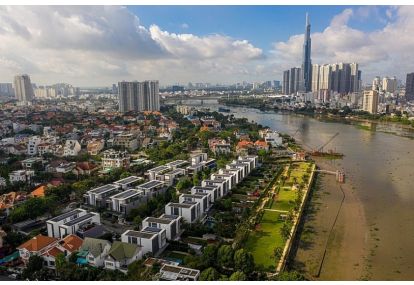
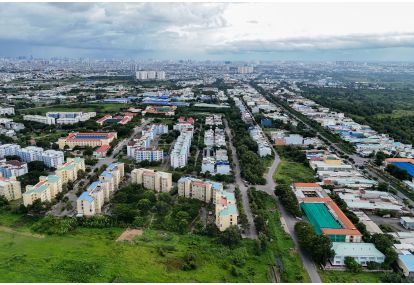
The Saigon Sport City project covers 64 hectares and is located in Thu Duc district in eastern Ho Chi Minh City, an area regarded as the future core of the city's economic, technological, and innovation center. The project is set to become a comprehensive development zone including premium residential areas, modern sports facilities, shopping centers, and service amenities. It aims not only to provide residents with a high-quality living space but also to drive the development of the sports and entertainment industries, helping Thu Duc district become a smart and modern urban area.
Keppel Corporation's Divestment Move
Keppel Corporation, through its subsidiary Jencity, has owned and advanced the Saigon Sport City project for many years. However, in its long-term business development strategy, Keppel decided to divest from this project to focus resources on other projects with greater potential in the Asian region. Specifically, Keppel will sell 35% of its shares to each of two local enterprises, HTV Dai Phuc Co., Ltd. and Vinobly Real Estate Investment Joint Stock Company, with a total transaction value of approximately VND 750 billion.
According to the Business Times, the transaction will be carried out in phases. HTV Dai Phuc will purchase 35% of Jencity shares in two installments: the first purchase of 5% of the shares is valued at 320 billion VND; the second purchase of the remaining 30% is valued at 329.06 billion VND. Meanwhile, Vinobly will purchase the remaining 35% of shares at a price of 383.9 billion VND. However, the payment schedule for the transaction will depend on the completion of legal procedures related to the Saigon Sport City project.
Introduction to Two Local Enterprises
Keppel's choice to partner with two local enterprises is not only a commercial collaboration but also shows that local Vietnamese businesses are gradually gaining the capability and potential to participate in large-scale real estate projects.
HTV Dai Phuc Co., Ltd. is headquartered in Bien Hoa City, Dong Nai Province, a key area for economic development in southern Vietnam. The company is closely involved in the development of real estate projects in the areas surrounding Ho Chi Minh City. The company's legal representative is Mr. Trinh Manh Thanh, who has extensive experience in the real estate sector and is also the legal representative of Dai Phuc Two-Member Co., Ltd.
Vinobly is a company located in Long Binh Ward, Thu Duc City, primarily providing financial services. Although the company was just established at the end of 2023, it quickly participated in equity transactions for the Saigon Sport City project, demonstrating its strong market ambition. The company's legal representative is Mr. Nguyen Thanh Hoai, who is also the legal representative of Kien Nam Law Firm (Limited Liability Company with One Member).
Both companies were established at the end of 2023, which has sparked market curiosity about their preparedness and long-term strategies in large-scale real estate projects.
The impact of this transaction on Vietnam's real estate market
Keppel's divestment from the Saigon Sport City project is not merely a commercial transaction but also holds significant implications for Vietnam's real estate market. First, it demonstrates a strategic shift by foreign enterprises in the Vietnamese market. Previously, international companies like Keppel typically dominated large-scale projects, but now local firms such as HTV Dai Phuc and Vinobly are gradually showing their financial strength and market competitiveness.
Secondly, this transaction will drive the development of the Thu Duc district, which is being planned as an important smart city development center for Ho Chi Minh City. The participation of local businesses will make Saigon Sport City a new highlight in Vietnam's real estate market.
Finally, the success of HTV Dai Phuc and Vinobly in this transaction demonstrates the rapid growth of Vietnam's real estate market, particularly the participation and competitiveness of local enterprises in large-scale complex projects.
Conclusion
The equity transaction between Keppel Corporation and local enterprises in the Saigon Sport City project marks a significant turning point in the development of Vietnam's real estate market. This not only demonstrates a shift in international corporate strategy but also reflects the potential and development prospects of local enterprises. With the development of Saigon Sport City, the real estate market in Thu Duc district and the entire Ho Chi Minh City is set to undergo new transformations.