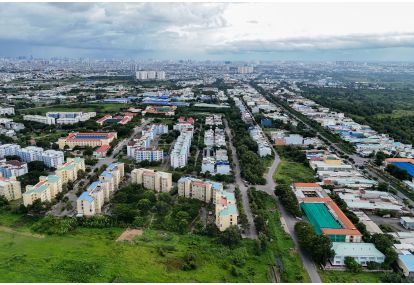
Residential land prices should not be used to calculate commercial land taxes
The topic "Residential land prices should not be used to calculate commercial land tax" is becoming a complex and controversial issue in the real estate sector and among investors. Using residential land prices to determine commercial land tax not only brings many unreasonable aspects in terms of legal regulations and cost calculations, but also distorts the structure of the real estate market, negatively affecting sustainable economic development. Through this article, we will deeply analyze why using residential land prices to calculate commercial land tax is unreasonable, and explore the limitations and impacts this method may bring on legal and economic levels.
First, it is necessary to analyze the fundamental differences between residential land and commercial land from legal and economic perspectives. Residential land is planned and used for building houses to meet residents' living and settlement needs. The characteristics of residential land are directly related to social stability, ensuring housing rights, and improving the quality of life of the people. In contrast, commercial land is used for business activities, commercial transactions, and providing services. These characteristics make the economic potential and profitability of commercial land much higher than that of residential land, and are significantly influenced by the land's location and commercial development potential. Therefore, the value of commercial land is not only reflected in its geographical location, but also in its ability to generate profits through various economic activities. This fundamental difference indicates that applying the same price framework to calculate taxes for commercial and residential land will lead to inaccurate and unfair results.
A major limitation of using residential land prices to calculate commercial land tax is the failure to reflect the true economic value of commercial land. Especially in city center areas, commercial land usually has higher profitability because it can attract investment, has the potential for developing commercial activities, and can provide better customer access. Areas with convenient locations, dense populations, and well-developed infrastructure will create outstanding value for commercial land, thereby enhancing its profitability. Therefore, if residential land prices are used to calculate commercial land tax, it not only fails to correctly reflect the economic value of the land, but may also impose unnecessary financial burdens on certain investors, or allow some investors to benefit from tax rates lower than the actual value, thus affecting the competitiveness and transparency of the market.
Furthermore, using residential land prices to calculate commercial land taxes also negatively impacts national fiscal revenue. Commercial land tax revenue plays an important role in investments in infrastructure, education, healthcare, and other public services. Incorrect tax rates can significantly reduce this revenue, leading to funding shortages for public projects and slowing down the process of economic and social development. Especially in the context of the need to continuously increase infrastructure investment to meet urban and economic development demands, the loss of commercial land tax revenue can seriously affect the nation's sustainable development capacity. Inaccurate tax policies can also lead to lower efficiency in resource allocation and reduce the investment motivation of potential investors.
Another factor to consider is inequality in the real estate market. If tax rates do not truly reflect the value of commercial land, inequality will arise among investors. Some investors may bear higher taxes because the actual value of their commercial land is higher than the applicable residential land price, while others may benefit from lower rates. This not only undermines the fairness of the real estate market but also increases investment risk, affecting investors' trust in national policies. Furthermore, when tax policies are not reasonably adjusted, the market may become opaque, thereby creating conditions for speculative behavior and price manipulation.
Therefore, establishing a tax pricing mechanism suitable for commercial land is crucial and urgent. The government and relevant agencies should clearly distinguish different types of land and establish corresponding tax policies to ensure the fair, transparent, and effective operation of the real estate market. Only when tax policies align with the characteristics of each type of land and its development potential can we ensure that the real estate market moves toward a healthy and sustainable direction and makes a positive contribution to economic and social development. This not only helps optimize national fiscal revenue but also creates a favorable investment environment, promoting legal and efficient economic activities. Regulatory bodies need to continuously review, update, and adjust tax policies to ensure they align with the realities of the market and the direction of economic development.
In summary, calculating commercial land tax based on residential land prices is a policy that requires timely review and adjustment. The government should formulate appropriate measures and regulations to ensure that tax rates accurately reflect the economic value and development potential of different types of land. Only in this way can the real estate market develop on a transparent and fair basis, and promote the sustainable development of the entire society.
#FTT Real Estate Co., Ltd.
(#Real Estate Consulting / #Leasing and Property Management and Sales / #Furniture and Decoration)
LINE official account @ymq0321f|Zalo +886 956 918 888|WeChat
┃Youtube: FTT REAL ESTATE
┃Website : www.fttland.com