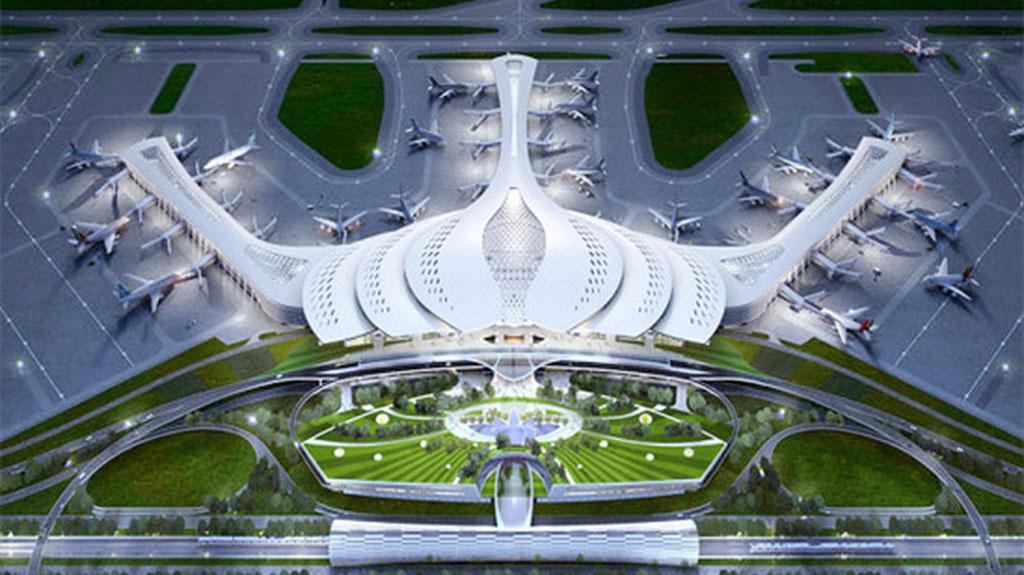
Accelerated construction of the super airport
Long Thanh International Airport accelerates its rise: Vietnam's aviation infrastructure 'iron fist' and a huge boost for southern real estate
After nearly a decade of planning and preparation, Long Thanh International Airport — a landmark project in Vietnam's aviation history — is entering a critical sprint phase at an astonishing pace. This is not only a major national transportation project but is also seen as an important engine driving the transformation and upgrading of southern real estate and the regional economy.
Original image: images2.thanhnien.vn
Major milestone launched: from blueprint to physical terminal
At the end of July, the Vietnam Air Traffic Management Corporation (VATM) and related units jointly completed the first round of flight verification tasks at Long Thanh Airport, using the professional aircraft King Air 350ER to inspect taxiways, runway lights, precision navigation systems, and other facilities, kicking off the safety testing phase before the airport enters operation.
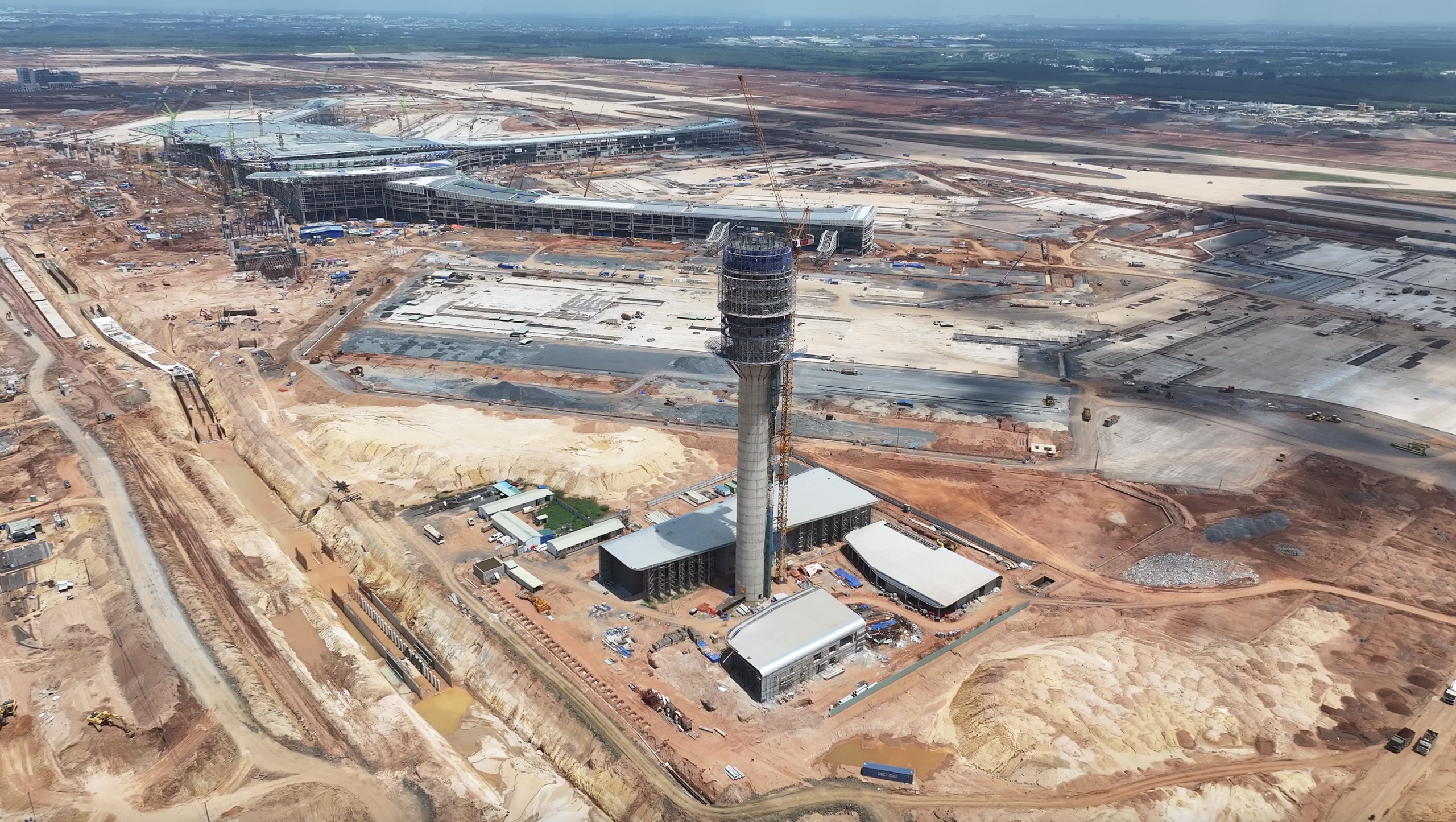
According to the report of the Airports Corporation of Vietnam (ACV), the main terminal building of Long Thanh Airport has completed its roof structure, with over 12,000 square meters of exterior wall glass installed, and is expected to be fully completed by the end of August. Various internal facilities of the airport — baggage handling systems, boarding bridges, power and fire protection facilities, etc. — are progressing simultaneously, with official operation expected in early 2026.
Currently, the construction site has gathered more than 13,000 technicians and workers, as well as over 3,000 heavy machinery units, accelerating all construction sections to lay the foundation for timely opening. The main transportation trunk system is fully connected, building the airport city network
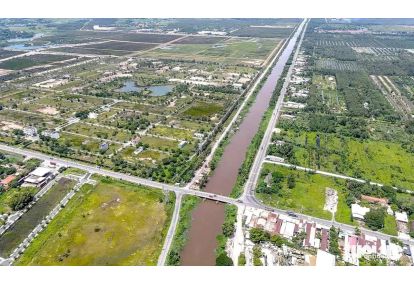
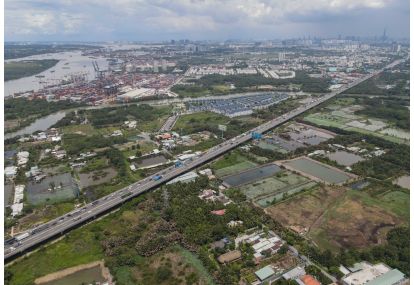
In conjunction with the airport construction, the Vietnamese government is simultaneously advancing the T1 and T2 airport-dedicated connecting roads, both of which have been opened to traffic and are expected to be officially completed in August. Local governments are also actively expanding existing major roads such as 25B and 25C, connecting Ho Chi Minh City, Bien Hoa City, and the southeastern provinces to create an efficient transportation network between the airport and the city.
Original image: titangroup.vn
The "Airport Economic Circle" Takes Shape, Unleashing Real Estate Value Growth
Long Thanh Airport is not just a transportation hub; it is Vietnam's first introduction of the "Airport City" urban airport concept under international standards. According to the plan, the airport's surroundings will feature multiple economic functional zones, including:
-
Commercial, financial, and exhibition zones (approximately 1,700 hectares)
-
Logistics, high-tech industrial, and biotech R&D parks (approximately 7,100 hectares)
-
International education and research facilities (approximately 100 hectares)
-
Leisure, tourism, and high-end resort areas (approximately 1,800 hectares)
This will drive massive demand for residential, office, warehousing, retail, and tourism accommodation, forming a vast "airport economic ecosystem" and injecting core long-term growth momentum into Vietnam's real estate.
The actual market is already reflecting these expectations. According to local brokerage statistics, from the end of 2023 to now, land prices in areas near Long Thanh Airport (such as Binh Son, Loc An, and Phuoc Thai) have risen by an average of 10%–15%; inquiries for logistics and industrial real estate have also increased significantly, with foreign enterprises continuously positioning warehousing and supply chain bases.
Strategic Upgrade of Aviation Infrastructure, Aiming to Become an ASEAN Hub
According to the Vietnamese government's "National Airport Master Plan for 2021–2030," Vietnam will develop two major international aviation hubs: Hanoi (Noi Bai Airport) and Ho Chi Minh City (Long Thanh and Tan Son Nhat), achieving ICAO 4F standards, benchmarking against Singapore Changi and Malaysia's Kuala Lumpur International Airport.
In addition to Long Thanh, several other locations in Vietnam are simultaneously accelerating new airport construction:
-
Gia Binh International Airport (Bac Ninh Province): Expected to reach 15 million passengers and one million tons of cargo annually by 2050, serving as an important symbol of APEC 2027
-
Phu Quoc International Airport (An Giang Province): Planned annual capacity to increase to 50 million passengers, developing into a smart, regional-level air gateway
-
Chu Lai Airport (Central Region): Aiming to become a logistics and shipping center for Central Vietnam
Real estate enterprises are accelerating their entry, with 'airport cities' becoming a key future sector
The land market around Long Thanh has long attracted attention from domestic and international developers, with major real estate groups such as Vinhomes, Novaland, Nam Long, and Dat Xanh actively positioning themselves early, reserving land resources, and targeting high-value-added sectors such as residential communities, logistics parks, and commercial office buildings.
According to industry analysis, as Long Thanh enters its operational phase in the future, the new airport town will rise rapidly, driving:
-
Population clustering and high-end community development
-
Increased rental market demand and real estate yields
-
Strong appeal to foreign investment, manufacturing, and technology industries
-
Simultaneous surge in demand for logistics, warehousing, cold chain, and data centers
Seize the infrastructure dividend and grasp the future of real estate appreciation
The rapid progress of Long Thanh International Airport is not only a major milestone for Vietnam's aviation industry but also a golden opportunity for real estate transformation and upgrading. As the airport economic zone gradually takes shape, real estate value will evolve from mere land into 'regional strategic assets.' Whoever positions themselves early will occupy the high ground in this aviation dividend.