Ho Chi Minh City is facing a shortage of affordable rental housing
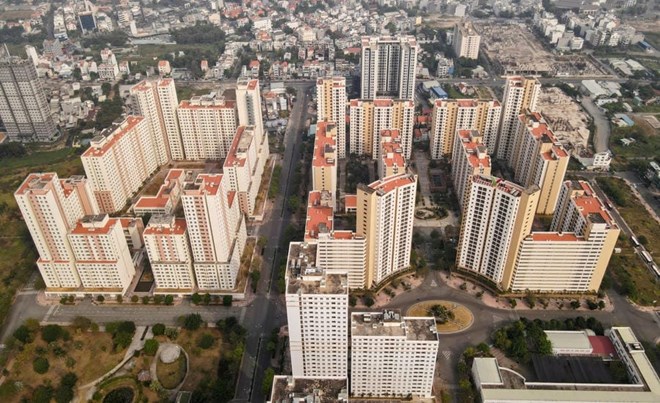
The rental housing market in Ho Chi Minh City is facing a severe supply shortage and has not yet been fully developed.
Original image: media-cdn-v2.laodong.vn
Renting as a way of settling down will become a new trend in modern cities. Image source: Anh Tú
Encouraging businesses to invest in the rental housing market
According to data from the Ho Chi Minh City Development Research Institute, among the total demand for social housing in Ho Chi Minh City, the “rent-to-own demand” accounts for 68.1%, the “purchase demand” accounts for 26%, and the pure rental demand accounts for 5.9%.
Among these, the main group for the long-term rental model is the salaried class (civil servants, office workers, laborers, armed forces, etc.), accounting for as much as 82%; the student group accounts for 14%, mainly in the form of socialized dormitories and mini apartments. In other words, about 96% of the stable-income group actually has the ability to pay rent, as long as the rent price is kept within a reasonable range.
Dr. Nguyễn Duy Phương, Chief Investment Officer of DG Capital, stated that compared to commercial housing, which allows for quick capital recovery, rental housing projects have a capital recovery cycle of 15 to 20 years and are quite sensitive to interest rate changes. Currently, businesses still have to bear commercial loans with annual interest rates of 10% to 14%, and financial costs will significantly impact investment profits.
Therefore, if businesses are to actively participate in this market, the government needs to provide long-term, low-interest, and stable loan schemes, because rental housing itself has a longer capital recovery period. In addition, incentives such as land use tax and corporate income tax should also be provided, or tax reduction policies should be given to projects that commit to long-term reasonable rentals.
More breakthrough incentive policy mechanisms are needed
Lê Hoàng Châu, Chairman of the Ho Chi Minh City Real Estate Association (HoREA), stated that the biggest current issue lies in area regulations and urban planning thinking.
He pointed out that currently, social housing regulations require a minimum area of 25 square meters. However, for single workers or general laborers, renting a 25-square-meter unit still places a relatively high burden. International principles suggest that rent should not exceed 20% to 25% of income. Vietnam is already close to the 25% upper limit, indicating a heavy rental burden. When 25-square-meter units do not match market affordability, developers easily face financial pressure. In contrast, many people currently live in private rental units of 15 to 20 square meters.
Therefore, he believes that significant institutional adjustments are needed, such as allowing businesses to develop social housing in the form of rental apartments and relaxing the minimum area requirement.
Dr. Nguyễn Duy Phương also proposed that the government should formulate a dedicated strategy, including: reserving land for developing affordable rental housing; providing loans and tax incentives to investing businesses; and developing rental housing areas along metro lines, in industrial parks, and near employment centers. At the same time, standardized long-term rental contracts should be established to give tenants a sense of stability akin to 'owning a home' rather than just 'temporary living.'
In terms of profits, the current 10% profit cap on social housing still lacks appeal for businesses.
As for land resources, Ho Chi Minh City, after administrative consolidation, possesses quite abundant public assets and housing resources, which should be effectively utilized to develop policy housing.
In addition, a city-wide shared resettlement housing fund could be established, allowing flexible adjustments in use among resettlement housing, public housing, social housing, and urban renewal housing, without cumbersome procedures for changing functions.
Besides building new social housing, existing resources should be better utilized to promote diverse housing models, including purchase, rent-to-own, and rental, so that different groups can benefit.
Dr. Nguyễn Duy Phương believes: 'When the government holds the power over land and project approvals, direct implementation by state-owned enterprises will be more efficient; conversely, if it is continuously left entirely to private enterprises, administrative procedures will be very cumbersome and time-consuming.'
Data source: Gia Miêu