Ho Chi Minh City plans to reduce residential land quotas in multiple areas
According to the new draft regulations, for households and individuals who used land before October 15, 1995, the residential land recognition limits in Ho Chi Minh City will be reduced in several areas…
The Department of Natural Resources and Environment of Ho Chi Minh City recently issued a document to relevant units, soliciting opinions on the draft decision of the Ho Chi Minh City People's Committee regarding the recognition of residential land limits for households and individuals who used land before December 18, 1980, and between December 18, 1980 and October 15, 1993, in accordance with Article 141, Clause 5 of the 2024 Land Law.
According to this draft, for households and individuals in districts 1, 3, 4, 5, 6, 7, 8, 10, 11, 12, Go Vap, Binh Thanh, Phu Nhuan, Tan Binh, Tan Phu, Binh Tan, and Thu Duc City, the residential land recognition limit will not exceed 160 square meters per household.
In rural residential areas of Binh Chanh, Hoc Mon, Cu Chi, Nha Be, and Can Gio districts, the limit is 250 square meters per household.
In town areas and urban development planning zones of Binh Chanh, Hoc Mon, Cu Chi, Nha Be, and Can Gio districts, the residential land recognition limit will not exceed 200 square meters per household.
Compared with Decision No. 18 of the Ho Chi Minh City People's Committee (dated May 16, 2016), which stipulated that the residential land limit for households and individuals in districts 1, 3, 4, 5, 6, 8, 10, 11, Go Vap, Binh Thanh, Phu Nhuan, Tan Binh, and Tan Phu should not exceed 160 square meters per household.
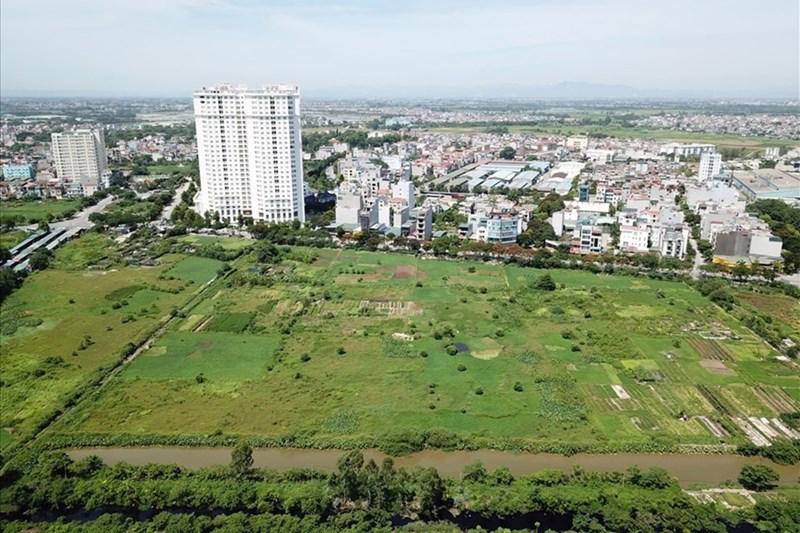
Original image: media.vneconomy.vn
In districts 2, 7, 9, 12, Binh Tan, Thu Duc, and in town areas of Binh Chanh, Hoc Mon, Cu Chi, Nha Be, and Can Gio districts, the limit is 200 square meters per household.
The limit in urban development planning zones is not more than 250 square meters per household. In rural residential areas of Binh Chanh, Hoc Mon, Cu Chi, Nha Be, and Can Gio districts, the limit is not more than 300 square meters per household.
Therefore, according to the new draft, land limits in many areas have been adjusted and reduced. Specifically, Thu Duc City (including the former districts 2, 9, and Thu Duc), districts 7, 12, and Binh Tan will decrease from 200 to 160 square meters.
In Binh Chanh, Hoc Mon, Cu Chi, Nha Be, and Can Gio districts: in town areas and urban planning zones, the limit will decrease from 250 to 200 square meters; in rural residential areas, it will decrease from 300 to 250 square meters.
In the town areas of the 5 suburban districts, the residential land limit remains unchanged at a maximum of 200 square meters.
According to the Ho Chi Minh City Department of Natural Resources and Environment, residential land is the area used for building houses and living facilities; gardens and ponds connected to the same plot of land as the residence. The residential land limit is the standard that management agencies use when recognizing land use rights and allocating land to residents. The residential land limit varies by province and city.
In addition, the Department of Natural Resources and Environment of Ho Chi Minh City also recommends unifying a residential land recognition limit for the land use periods before December 18, 1980, and between December 18, 1980, and October 15, 1993, to ensure continuity, consistency, and suitability to the actual conditions of Ho Chi Minh City.
Explaining this change, the Department of Natural Resources and Environment of Ho Chi Minh City stated that although the demand for residential land construction is very high in all districts of Ho Chi Minh City, the current stock of unrecognized residential land is very low.
Currently, the urbanization speed of Districts 7, 12, Binh Tan, and Thu Duc City is developing rapidly. In the urban development planning areas of Binh Chanh, Hoc Mon, Cu Chi, Nha Be, and Can Gio districts, the housing construction density and land stock are not inferior, and even surpass those of the town centers in these districts.
Meanwhile, the new Land Law stipulates that for land used before December 18, 1980, and between December 18, 1980 and October 15, 1993, if it is recognized as residential land, no land use fee is required for the residential land within the quota.
Therefore, setting a higher recognition limit for residential land and applying it across multiple administrative units serves not only the aforementioned reasons but also aims to reduce the state's land use fee revenue.