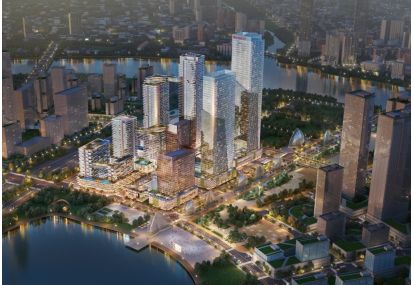
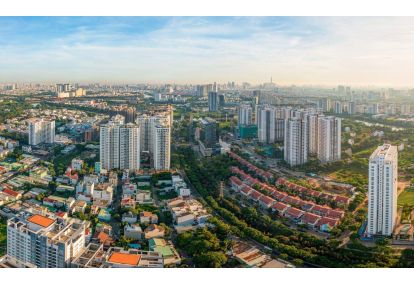
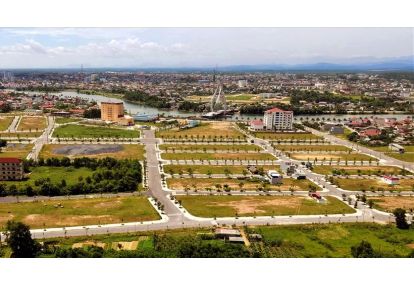
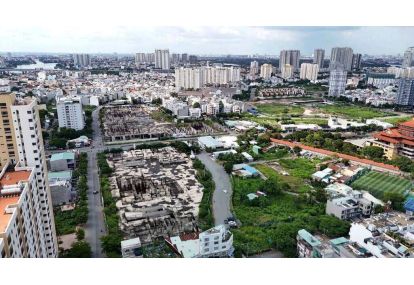
Supply of social housing not growing as expected
The development of social housing is one of the essential factors in meeting people's housing needs and ensuring social welfare. However, the government's target of completing 130,000 social housing units by 2024 is facing numerous challenges and obstacles in terms of policy, finance, and planning. This is not only about providing housing for low-income groups but also affects overall economic and social stability. Although social housing projects are seen as an important solution for promoting sustainable development, actual progress shows a significant shortfall.
Based on the assessment of the supervision results of real estate market management policies and laws, as well as social housing development, implemented during the 2015-2023 period, the National Assembly supervision team confirmed that although some localities have allocated land for social housing construction, most have failed to ensure the necessary independent land supply. Instead, social housing development mainly relies on the 20% land quota within commercial housing projects, which weakens the stability and sustainability of social housing projects. Relying on these land sources not only increases the difficulty of planning management but also reduces project feasibility, as many investors do not prioritize allocating sufficient land for social housing.
According to data from the Ministry of Construction, from 2021 to the third quarter of 2024, 622 social housing projects have been launched nationwide, with a total scale of 565,177 units, but only 79 of these projects have been completed, providing 42,414 housing units. The proportion of housing that has been started and completed has only reached about 35.6% of the target of the proposal "Building at least 1 million social housing units for low-income people and workers in industrial parks during 2021-2030." These figures show a huge gap between expectations and reality. In addition, the progress of projects varies across regions, widening the gap between supply and demand, especially in areas with dense populations and high housing demand.
Key challenges include the lack of independent land, cumbersome legal procedures, and a lack of coordination between government agencies and investors. The absence of independent land resources makes the development of social housing projects dependent on others and lacking in proactiveness. Furthermore, legal procedures are overly cumbersome and complex, involving multiple stages, including basic design approval, construction permits, and fire safety approval, which typically take months or even years to complete. These processes not only increase project costs but also extend implementation time, significantly reducing the capacity to meet the housing needs of the public.
In addition, the lack of coordination between government agencies and investors is also an important issue. Management agencies and investors need closer cooperation to resolve issues such as land acquisition, capital allocation, and infrastructure construction. Capital shortage is a significant obstacle; in many cases, commercial banks are reluctant to provide financial support for social housing projects due to concerns about low returns and high risks. Although the government has provided financial support, it is still insufficient to ensure the feasibility of many projects, leading to construction delays or slow progress.
To improve the current situation, the Ministry of Construction has required localities to focus on supplementing and revising planning to ensure sufficient land is allocated for social housing development. In addition, the Ministry of Construction has also promoted measures to keep social housing prices within a reasonable range and continued to reform administrative procedures to increase supply. Particularly in urban planning reform, prioritizing the review and identification of suitable locations for social housing development is crucial. Furthermore, simplifying licensing procedures and supporting investors in accessing capital are also significant for ensuring project progress and quality.
One of the strategic solutions is to diversify the types of social housing, from rental housing to rent-to-own housing, to meet the needs of different groups, including industrial park workers and low-income urban residents. Expanding these forms helps increase flexibility in housing choices for the public and alleviate the financial pressure on those who cannot afford to buy a home. At the same time, the Ministry of Construction also recommends that investors be more proactive in completing legal procedures and ensure financial readiness so that construction can begin immediately after approval.
Promoting the supply of social housing still relies heavily on financial support policies. Although the government has proposed low-interest preferential loan schemes for social housing projects, there are still many obstacles in accessing these funds. Banks should adopt more flexible policies to create favorable conditions for investors. At the same time, support measures from the government, such as land rent and tax reductions, also need to be implemented more effectively to encourage investor participation.
Looking ahead, the Ministry of Construction and relevant agencies are committed to continuing close collaboration to achieve the set goals, accelerate the progress of social housing projects, and ensure their quality while keeping prices at reasonable levels to ensure accessibility for the public. The combination of administrative reform, financial support, and effective planning is key to boosting the supply of social housing, meeting the growing needs of the people, and promoting stability in the real estate market and sustainable development of the national economy.
#FTT Real Estate Co., Ltd.
(#Real Estate Consulting / #Leasing and Property Management and Sales / #Furniture and Decoration)
LINE official account @ymq0321f|Zalo +886 956 918 888|WeChat
┃Youtube: FTT REAL ESTATE
┃Website : www.fttland.com