Government Pilot Expands Land Use for Commercial Residential Projects: A New Move to Increase Supply
The Vietnamese government has just proposed a new policy aimed at addressing supply difficulties in the real estate market, particularly for commercial housing, allowing investors to acquire land use rights for agricultural and non-agricultural land through negotiation within 5 years to implement commercial residential projects. This is a bold move, hoping to improve the current shortage of land for residential projects. This is of great significance for real estate development, especially against the backdrop of continuously rising housing prices, which makes it difficult for residents with housing needs.
According to Minister of Natural Resources and Environment Do Duc Duy, currently under the 2014 Housing Law, investors can only implement commercial residential projects when they have land use rights. This is a major obstacle for investors, especially in some undeveloped areas and places with limited residential land. The government believes that this mechanism needs to be changed to provide more favorable conditions for commercial housing in the development of new urban areas. Expanding the types of land available for residential projects will help promote housing development in suburban areas, where residential land is scarce and agricultural land predominates.
To address this issue, the new pilot policy allows investors to negotiate with residents to acquire land use rights not only for residential land but also for agricultural land and other non-agricultural land. The condition is that these pilot projects must be located within urban areas and not fall under land that is to be reclaimed. The trial period for this policy is expected to be 5 years, which will be a period for evaluating the policy's impact on the real estate market, thereby making appropriate decisions for the future.
Local administrative agencies (Provincial People's Committees) will review and issue land use permits to enterprises operating in real estate. However, investors need to comply with legal regulations on housing, real estate, and investment. If the land's origin involves national defense or security, approval from the Ministry of Defense and the Ministry of Public Security is required. This is an important factor to ensure national security and avoid negative impacts from changing the use purpose of sensitive land.
This policy not only expands the scope of land supply but also helps reduce housing costs, as the increase in available land makes it easier for residents to access housing. Combining agricultural and non-agricultural land for commercial projects also provides opportunities to transform wasteland or inefficient land into modern residential areas with comprehensively invested infrastructure. However, during implementation, there must be detailed planning and strict supervision from relevant agencies to prevent speculation using the policy.
Risk Considerations for the Expansion Policy
Although the government has very clear goals in increasing housing supply, the policy has also undergone multiple reviews by the National Assembly's Economic Committee. The Chairman of the Economic Committee, Vu Hong Thanh, stated that the proposed pilot land types are too broad, including rice land, special-use forest land, and defense and security land. This could lead to some serious consequences, such as environmental imbalance, reduction in protected forest area, and impacts on food security. Changing the use purpose of special-use forest land or protective forest land requires extreme caution to avoid negative impacts on the ecosystem and environmental sustainability.
There are also concerns that allowing the use of agricultural and non-agricultural land for commercial residential projects may push up agricultural land prices, causing land price increases and leading to difficulties in land acquisition and compensation. Agricultural land is an important resource for ensuring national food security; converting land use may affect agricultural output and push up food prices. This not only affects agriculture but also impacts the lives of residents who depend on agricultural products, especially those with lower incomes.
To avoid these issues, the Economic Committee recommends that the government carefully review and clearly define the principles and circumstances for applying the pilot mechanism. In particular, clear regulations are needed on the types of land that can be converted and the limits on conversion area to avoid policy abuse. Strict control also helps prevent the legalization of violations or the hoarding of agricultural and non-agricultural land for commercial projects. These risks need to be thoroughly addressed so that the new policy can achieve its best results while ensuring market fairness and stability.
Resolving difficulties in existing real estate projects
This pilot policy can be seen as a necessary measure to address land difficulties for real estate projects, especially in the context of continuously rising housing prices and increasing difficulty in land acquisition. Allowing investors to access more types of land also expands the possibilities for project implementation, thereby helping to increase housing supply in the market. However, reasonable control measures are needed to avoid unnecessary fluctuations in the real estate market.
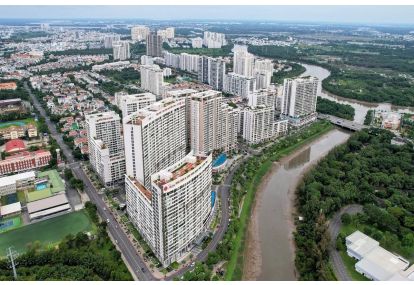
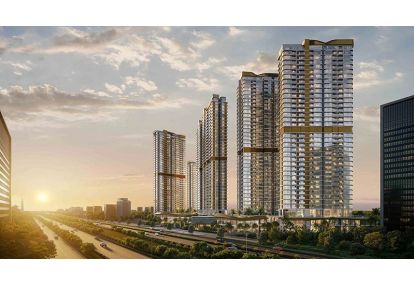
An important goal of this policy is to ensure that land for commercial residential projects is not restricted, particularly in new urban areas and suburbs. These areas have great development potential, but they face many land-related obstacles because most of the land is agricultural or undeveloped. Creating conditions for investors to access these lands will open opportunities for developing new urban areas to meet the growing housing demand.
However, to ensure transparency and prevent policy abuse, monitoring of the implementation process will need special attention. The government and the National Assembly need to establish clear standards and principles to not only promote real estate market development but also protect residents' rights and ensure social security and stability. Strict control is also necessary to prevent land price increases caused by speculation, which could create difficulties for those with genuine housing needs.
Furthermore, this policy needs to be accompanied by support for affected residents, especially farmers who lose their production land. Providing resettlement support, employment support, and ensuring residents' legitimate rights are essential for maintaining social stability and building people's confidence in government policies.
Conclusion
The pilot expansion of land types that can be used for commercial residential projects may be a positive step that helps address current difficulties in Vietnam's real estate market. However, careful implementation is needed to avoid negative impacts on the environment, food security, and society. The government needs strict management measures to ensure transparency during implementation, particularly with effective monitoring mechanisms to prevent policy abuse.
The National Assembly is expected to continue discussing this content in the upcoming sessions and may pass it by the end of the current term. What changes the new policy will bring to the real estate market, and whether these benefits outweigh the challenges it presents, remains an open question. What is certain is that, if implemented correctly, this policy will be an important driver for increasing housing supply, stabilizing prices, and promoting a sustainable real estate market.
In addition, the government also needs to continue monitoring and evaluating the impact of this policy so that timely adjustments can be made to ensure the best results. The pilot mechanism will be an opportunity for experimentation and adjustment, but specific measures are needed to ensure that the lessons learned from the pilot process can be applied to the improvement of the future Land Law and real estate development system. This is a challenge that requires close coordination among multiple agencies and various levels of government, but if resolved properly, it will bring long-term benefits to society and the economy.
#FTT Real Estate Co., Ltd.
(#Real Estate Consulting / #Leasing and Property Management and Sales / #Furniture and Decoration)
LINE official account @ymq0321f|Zalo +886 956 918 888|WeChat
┃Youtube: FTT REAL ESTATE
┃Website : www.fttland.com